What to Expect on Your Dry Eye Treatment Day
Your dry eye treatment visit is designed to be structured, comfortable, and predictable. At Drs. Bare, Basic & Rohm Optometrists in Charlottesville, advanced dry eye treatment is performed in office using a step-by-step sequence of therapies that target inflammation, blocked meibomian gland flow, and tear film instability.
Most treatment visits last about 60 minutes. Your first session usually lasts about 75 minutes because it includes consent review, additional preparation, and gentle diamond-tip exfoliation before the rest of the treatment sequence.
Depending on your treatment plan, your visit may include Intense Pulsed Light, Radiofrequency, Low-Level Light Therapy — often referred to as medical-grade red light therapy — and meibomian gland expression. These treatments are used together to help improve the eyelid and gland environment so the tear film can become more stable over time.
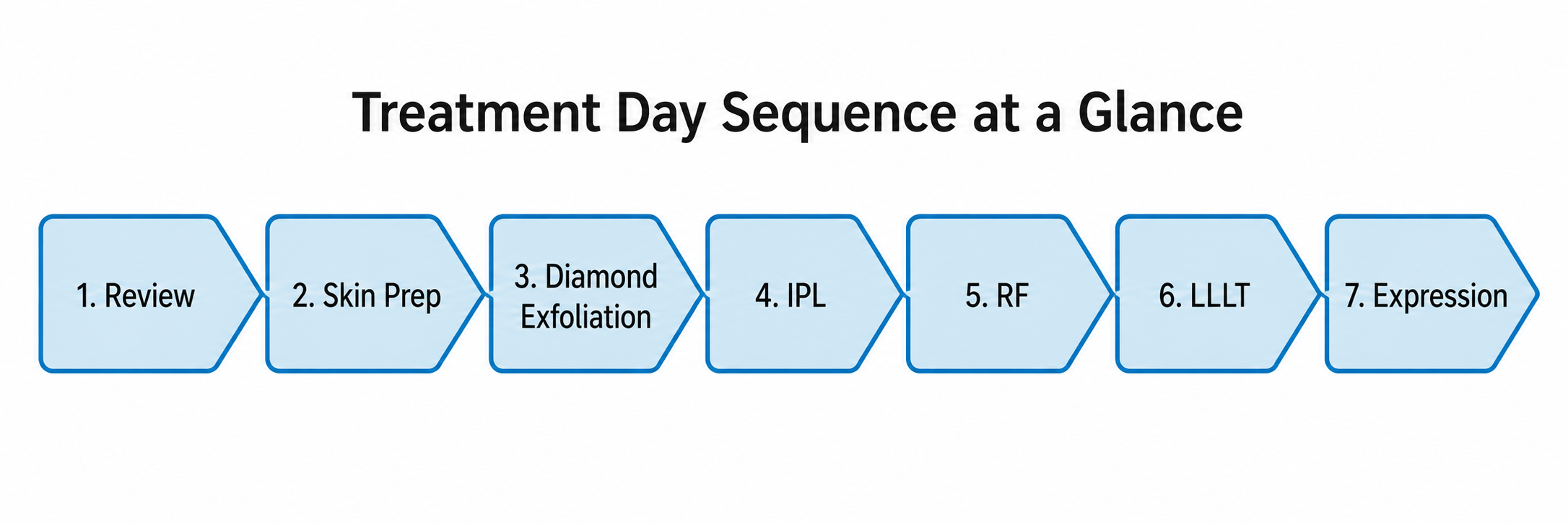
First session: about 75 minutes and includes diamond-tip exfoliation
Follow-up sessions: about 60 minutes and usually do not include exfoliation
Why Treatment Is Usually a Series
Dry eye treatment is not just about temporary comfort. For many patients, symptoms are connected to blocked or inflamed meibomian glands, unstable tear film, ocular rosacea, and thickened oil that does not flow normally into the tears.
Because meibomian gland dysfunction and ocular rosacea are usually chronic inflammatory conditions, treatment is often performed as a series. Visits are typically spaced about 2 to 4 weeks apart so each session can build on the progress from the one before.
The treatment steps are also designed to work together. IPL, radiofrequency, medical-grade red light therapy, and meibomian gland expression each support the gland environment in a different way. Over time, this stacking effect may help reduce inflammation, improve oil quality, support better gland flow, and help the tear film become more stable.
Before You Arrive
Come with clean skin and clean eyelids
On the day of treatment, please avoid wearing:
Makeup
Mascara
Eyeliner
“Waterline” or tightline eyeliner
Facial powders
Heavy moisturizers
Perfumes or facial oils
Makeup along the eyelid margin can block meibomian gland openings and contribute to inflammation. Clean eyelids also allow the treatment area to be prepared more safely and effectively.
If you arrive wearing makeup or skin products, we will provide makeup wipes and help you remove them before treatment.
Avoid sun exposure and tanning before light-based treatments
If you are scheduled for IPL, it is especially important to avoid tanning, tanning beds, sunless tanning products, and significant sun exposure before treatment. IPL interacts with pigment and blood vessels in the skin, so recent tanning can increase the risk of irritation, burns, or pigment changes.
Sun protection is also important after treatment. We recommend bringing your preferred facial sunscreen with you on treatment day. IPL instructions also emphasize sun protection before and after treatment.
Pause certain skin-care products when instructed
Before IPL or RF treatment, we may ask you to temporarily stop products such as retinoids, exfoliating acids, benzoyl peroxide, Vitamin C serums, hydroquinone, or other irritating skin-care products. These products can make the skin more sensitive around the time of treatment.
Tell us about medication, health, or skin-care changes
Before treatment, let us know if you have had any recent changes such as:
New medications, especially medications that increase light sensitivity
Recent Accutane/isotretinoin use
Pregnancy or breastfeeding
Active skin infection, eye infection, cold sore, or facial rash
Recent Botox, filler, waxing, chemical peel, laser treatment, or other facial procedure near the treatment area
History of cold sores around the eyes, cheeks, nose, or mouth
History of keloid scarring
Cardiac pacemaker, implanted defibrillator, cochlear implant, electrical stimulation device, mechanical heart valve, or metal implant concerns before RF
These do not always mean treatment is impossible, but they may change the timing, treatment choice, or safety precautions.
What Happens When You Arrive
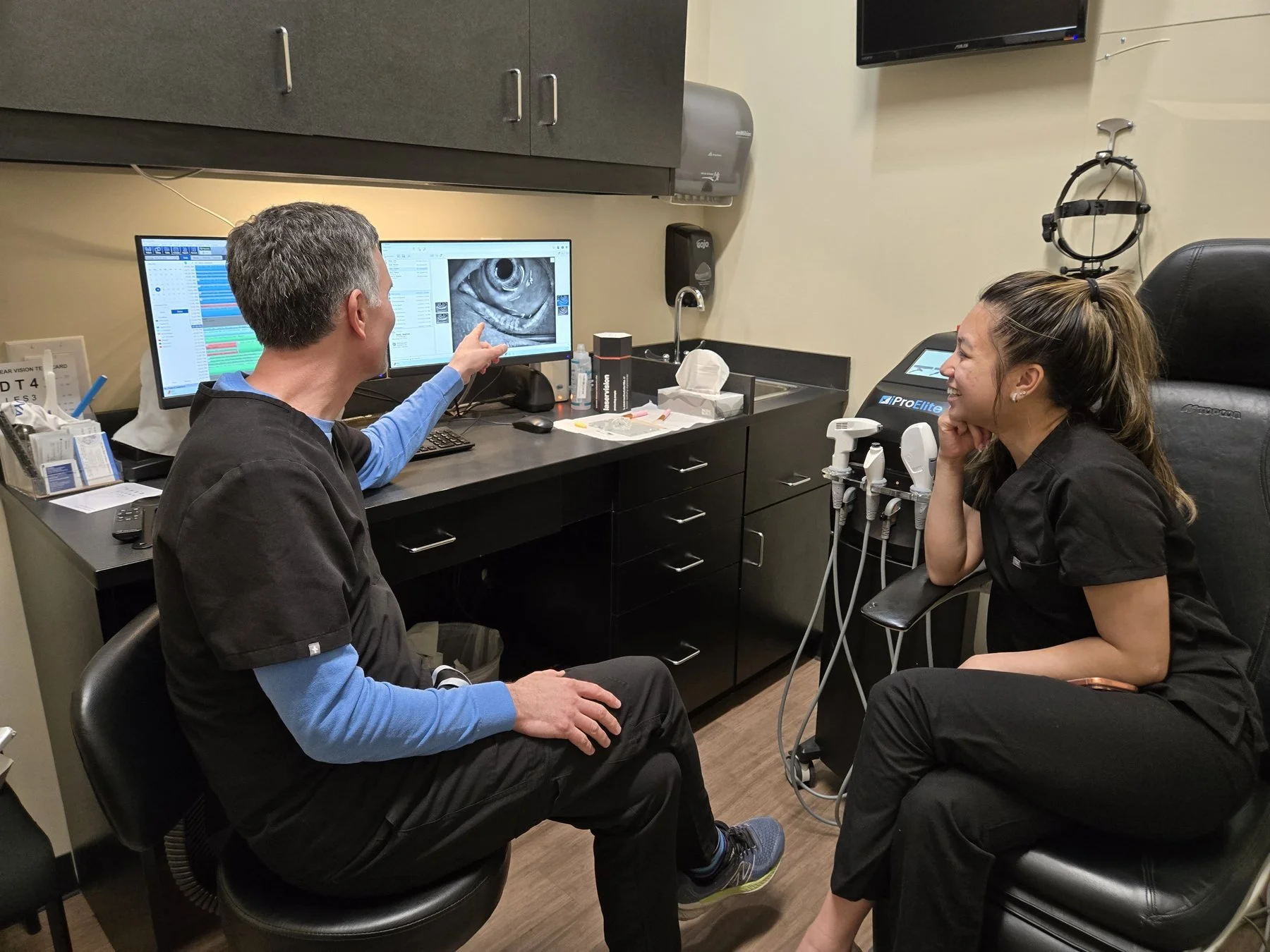
Before treatment begins, we will have you review and sign the appropriate consent forms in the office. A technician and/or doctor will talk with you about what is going to happen during the visit and answer any last-minute questions.
We will also review important precautions, including any changes in your medications, skin care, health history, sun exposure, or recent cosmetic procedures such as Botox, fillers, waxing, chemical peels, or laser treatments. These details help us make sure treatment is safe and appropriate for that visit.
All treatment visits are performed in office.
Before treatment begins, we review the plan for the day, confirm any medication or skin-care changes, and answer questions.
Diamond-Tip Exfoliation
First treatment session only
During your first treatment session, we begin with gentle diamond-tip exfoliation. This removes surface buildup from the treatment area and helps prepare the skin before IPL, radiofrequency, and low-level light therapy.
This step is usually performed only during the first session. Follow-up treatments generally begin with skin and eyelid cleaning before moving into the treatment sequence.
Patients often like this step because it leaves the skin feeling smoother, cleaner, and refreshed. While the purpose is to prepare the skin for dry eye treatment, it can feel like a nice added benefit at the beginning of the visit.
Gentle diamond-tip exfoliation helps prepare the skin before the first dry eye treatment session and often leaves the skin feeling smoother and refreshed.
Intense Pulsed Light
IPL treatment on the face and eyelids
Next, IPL is performed. Depending on your treatment plan, IPL may be applied to selected facial areas and directly on and around the eyelids.
Before IPL begins, we place protective corneal shields over the eyes. These are opaque protective lenses that sit on the surface of the eyes, similar to contact lenses. The shields protect the eyes from the IPL light and allow us to safely treat the eyelid area more directly.
For dry eye treatment, IPL is used to address inflammation and abnormal blood vessel activity associated with ocular rosacea, eyelid inflammation, and meibomian gland dysfunction. Many patients describe IPL as a quick flash of bright light with warmth or a brief snapping sensation on the skin. Most patients tolerate it well.
IPL can also have secondary cosmetic crossover benefits, including improvement in visible redness, small surface vessels, and uneven pigmentation. In this treatment plan, however, the primary goal is to improve inflammation around the eyelids and support healthier meibomian gland function.
IPL uses controlled pulses of light to treat inflammation and vascular changes that can contribute to ocular rosacea, meibomian gland dysfunction, and dry eye symptoms.
Radiofrequency
Controlled warmth around the eyelids and face
After IPL, radiofrequency treatment is performed. RF uses controlled thermal energy around the eyelids and face to gently warm the tissue and support meibomian gland function.
For dry eye treatment, the goal is to help soften thickened meibomian gland oil so it can move more normally into the tear film. When the oil becomes thick or waxy, it may not flow well with blinking. Warming the glands helps prepare them for expression later in the visit.
Most patients describe RF as warm and comfortable. A handheld applicator is moved along the treatment area with gentle pressure. The treatment should not feel sharp or painful.
RF can also have secondary cosmetic crossover benefits because controlled heat may support collagen remodeling and skin tightening. In this treatment plan, however, the primary goal is to improve meibomian gland oil flow and tear film stability.
Radiofrequency uses controlled warmth around the eyelids and surrounding facial tissue to help soften thickened meibomian gland oil before expression.
Low-Level Light Therapy / Red Light Therapy
Gentle therapeutic light treatment
After radiofrequency, Low-Level Light Therapy, often referred to as medical-grade red light therapy, is performed. LLLT uses specific therapeutic wavelengths of light to support inflammation control, circulation, and cellular activity around the eyelids and face. This is usually the most relaxing part of the visit. The light therapy device is positioned close to the face while you sit comfortably. Patients may feel mild warmth, but the treatment is typically painless.
For dry eye treatment, LLLT is used to help calm inflammation and support healthier meibomian gland function. It also has secondary cosmetic crossover benefits, including support for skin rejuvenation, redness reduction, and healing. In this treatment plan, the primary goal is to improve the eyelid and gland environment.
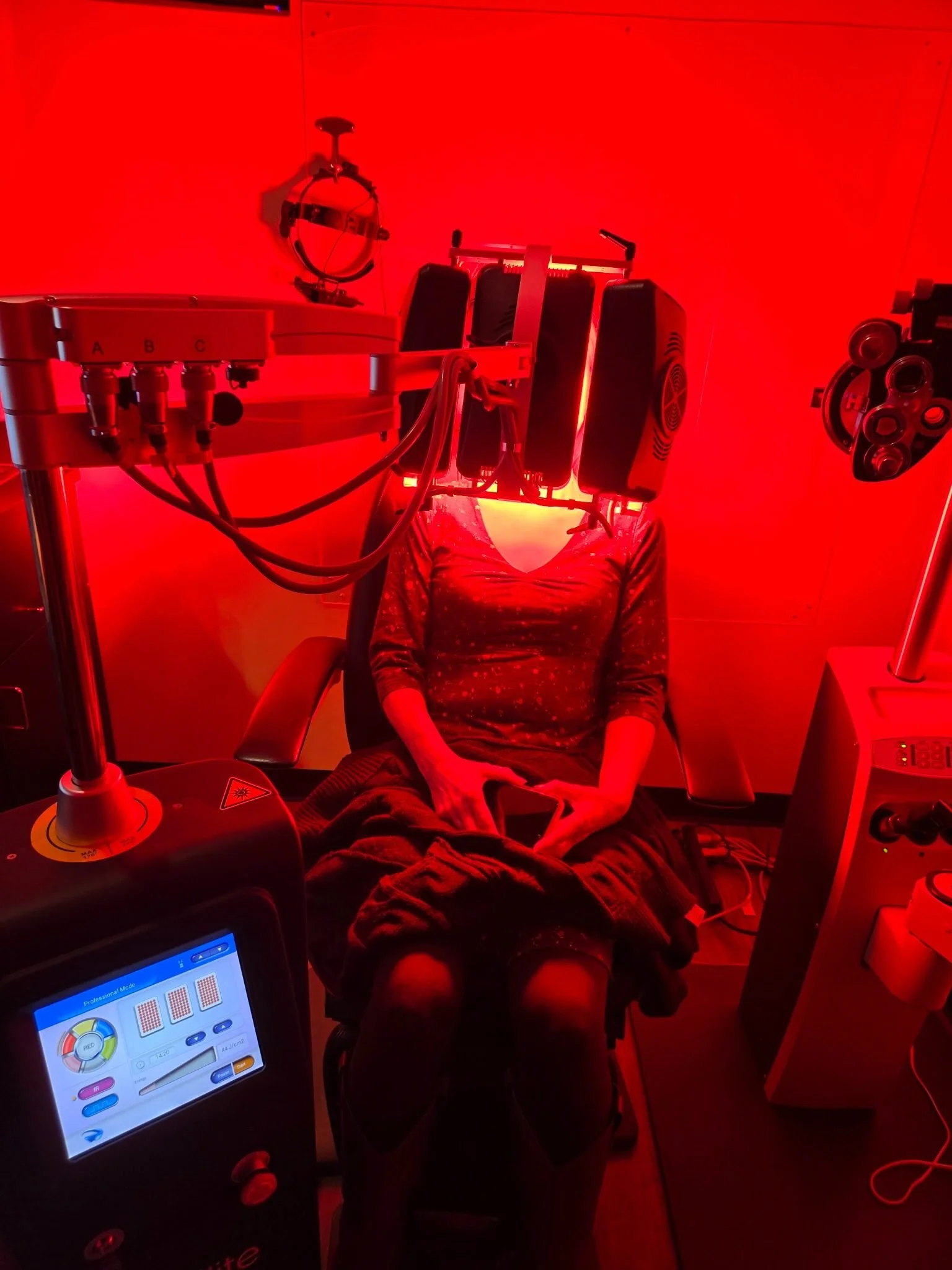
Low-Level Light Therapy is a gentle, comfortable treatment that supports inflammation control and eyelid health.
Meibomian Gland Expression
Clearing thickened oil from the glands
Meibomian gland expression is usually performed last, after IPL, radiofrequency, and low-level light therapy. By this point, the glands have been treated with light and warmth, which can help soften thickened oil and make expression more effective.
During expression, gentle pressure is applied to the eyelids to help clear stagnant oil from the meibomian glands. Some patients feel pressure during this step, but it should be tolerable. The goal is to remove thick, waxy oil so healthier oil can return to the tear film.
In some visits, expression may be performed more than once, such as after radiofrequency and again after low-level light therapy, depending on how the glands respond that day.
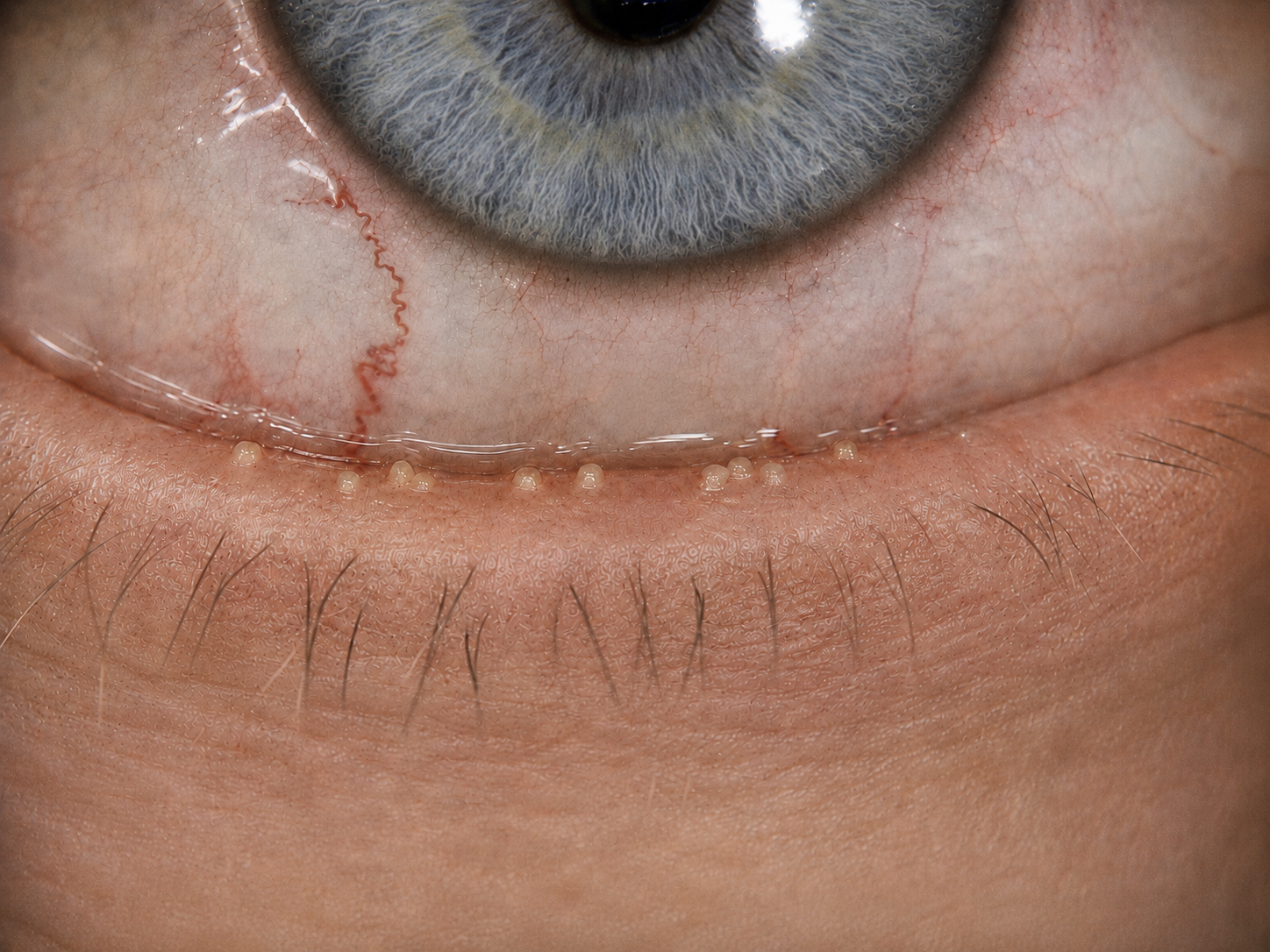
Thickened meibomian gland oil can become stagnant and waxy. After light and heat-based therapy, gentle gland expression helps clear this material so healthier oil can flow into the tear film.
Why We Do the Treatment in This Order
Each part of the visit builds on the step before it. IPL helps calm inflammatory and vascular changes. Radiofrequency warms the glands and helps soften thickened oil. Low-Level Light Therapy provides a calming, medical-grade light therapy step using red and near-infrared wavelengths. Expression is performed last so stagnant oil can be cleared after the glands have been warmed and treated.
The overall goal is healthier gland function, better oil flow, and a more stable tear film over time.
Most patients return to normal activities the same day.
Mild redness, warmth, swelling, or skin sensitivity can occur, especially after IPL or RF, but these effects are usually temporary.
After Treatment
Most patients can return to normal daily activities after treatment. Mild redness, warmth, swelling, or skin sensitivity can occur, especially after IPL or RF.
For the first few days, keep skin care simple: use a gentle cleanser, moisturize regularly, drink plenty of water, and use broad-spectrum SPF 30 or higher. Avoid tanning, prolonged sun exposure, harsh exfoliants, aggressive scrubbing, hot tubs, saunas, and excessive heat if instructed.
When Will I Notice Improvement?
Some patients notice improvement quickly, while others improve gradually over the treatment series. The goal is to improve oil flow, tear film stability, eyelid inflammation, and meibomian gland function over time.
Patients may notice less burning, watering, redness, irritation, contact lens discomfort, or fewer episodes of fluctuating vision. Individual response varies, especially when inflammation has been present for a long time or gland atrophy/dropout is already present.
Treatments may help improve the function of existing glands and reduce ongoing inflammation, but they cannot fully restore glands that have already been lost.
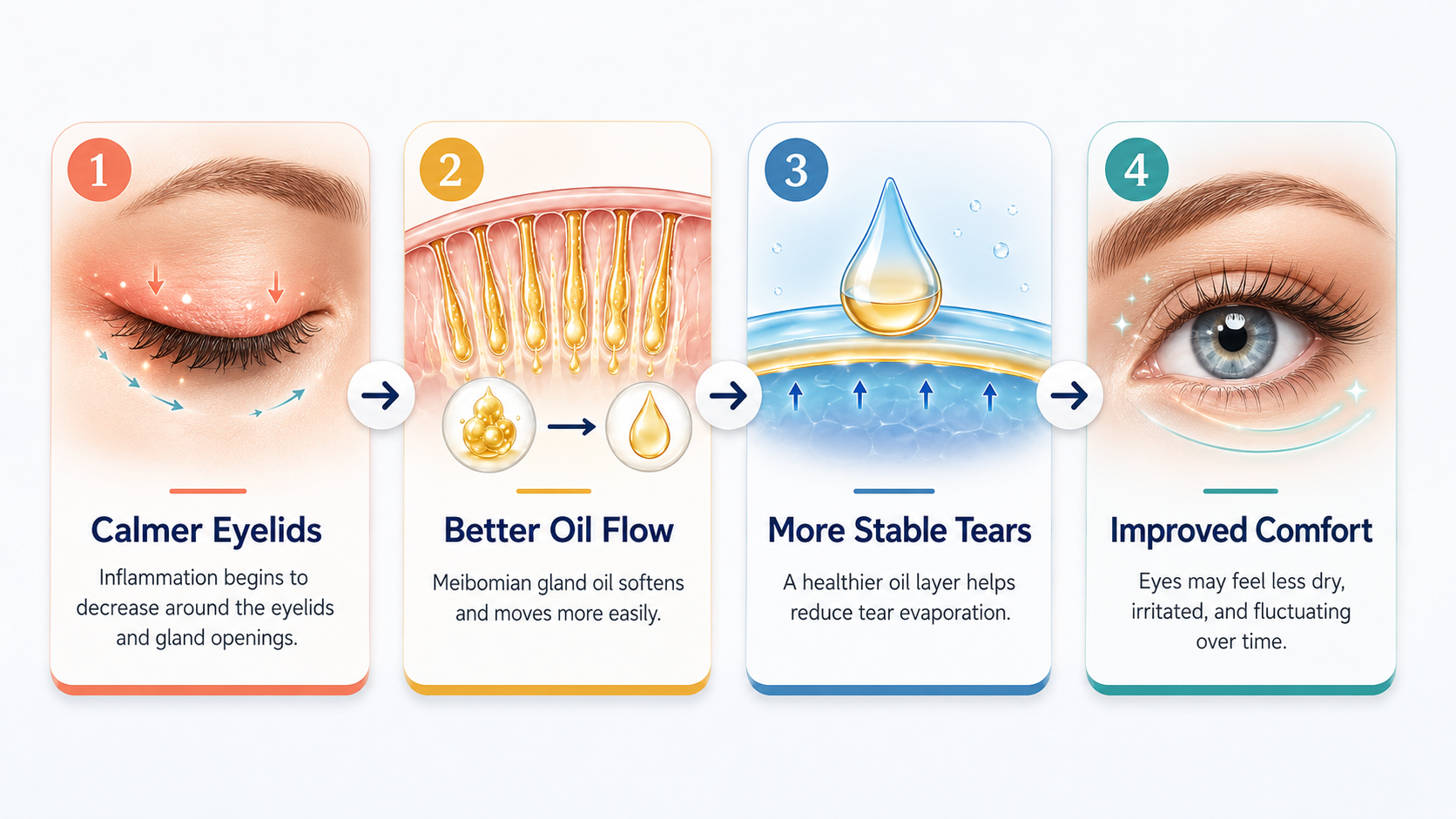
Why a Series and Maintenance May Be Recommended
Meibomian gland dysfunction and ocular rosacea are usually chronic conditions. After the initial treatment series, maintenance treatment may be recommended periodically based on symptoms, gland appearance, tear film stability, rosacea activity, and how long results last.
The goal is to keep inflammation controlled and oil moving rather than waiting for symptoms to fully return.
Skin Benefits Can Be a Welcome Bonus
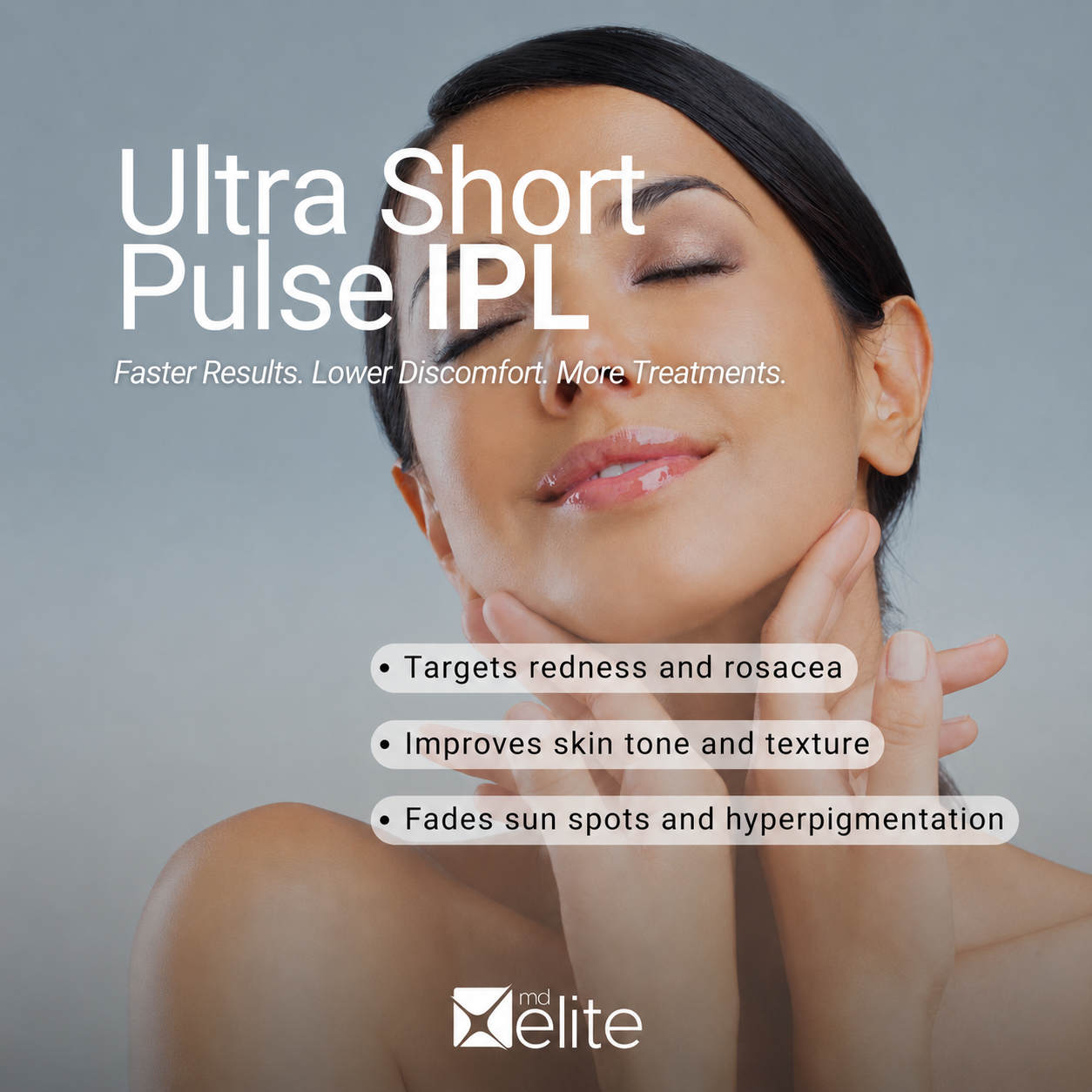
Some of the technologies used for dry eye treatment are also used in aesthetic medicine. IPL may help improve visible redness, small surface vessels, and uneven pigmentation. Radiofrequency may support collagen remodeling and mild skin tightening. Low-Level Light Therapy, commonly recognized by patients as a form of medical-grade red light therapy, may support skin rejuvenation, redness reduction, and healing.
In our office, these treatments are recommended first for dry eye, meibomian gland dysfunction, ocular rosacea, inflammation, and poor meibomian gland oil quality. Any improvement in skin appearance is a welcome added benefit, but the main goal is healthier eyelids, better gland function, and a more stable tear film.
Your Questions, Answered
-
Most treatment visits last about 60 minutes. The first session usually lasts about 75 minutes because it includes consent review, additional preparation, and diamond-tip exfoliation.
-
Yes. The first treatment usually includes gentle diamond-tip exfoliation before IPL, radiofrequency, low-level light therapy, and gland expression. Later sessions are generally similar but usually do not include exfoliation.
-
Yes. Consent forms are reviewed and signed in the office before treatment begins. A technician and/or doctor will also review what will happen during the visit and answer any questions.
-
Recent cosmetic procedures, certain medications, tanning, sunburn, pregnancy, active infections, and some medical conditions can affect whether treatment should be performed that day. These precautions help us keep treatment safe and appropriate.
-
Please arrive without makeup, mascara, eyeliner, foundation, facial oils, perfumes, or heavy moisturizers. If you arrive wearing makeup or skin products, we will provide makeup wipes and help you remove them before treatment.
-
Corneal shields are opaque protective lenses placed on the surface of the eyes during periocular IPL. They help protect the eyes while allowing us to treat closer to the eyelid area.
-
Most patients tolerate treatment well. IPL may feel like warmth or a quick snap on the skin. Radiofrequency usually feels warm with gentle pressure. Low-level light therapy is typically relaxing. Meibomian gland expression may create pressure, but it should be tolerable.
-
Expression is usually done after IPL, radiofrequency, and low-level light therapy because the glands have already been treated with light and warmth. This may make thickened oil easier to clear.
-
Most visits include IPL, radiofrequency, low-level light therapy, and meibomian gland expression. The first visit usually also includes diamond-tip exfoliation. The doctor may adjust the treatment based on your skin, gland response, comfort, or safety precautions.
-
Many patients do need maintenance because meibomian gland dysfunction, ocular rosacea, and inflammatory dry eye are chronic conditions. The timing depends on your symptoms, gland appearance, tear film stability, and how long your improvement lasts.
Preparing for Dry Eye Treatment in Charlottesville
Our goal is to make treatment day clear, comfortable, and medically purposeful. If you have been diagnosed with meibomian gland dysfunction, ocular rosacea, or inflammatory dry eye, we will walk you through each step and explain how your treatment plan supports healthier gland function and a more stable tear film.
To learn more about the individual treatments, visit our pages on IPL for dry eye, radiofrequency treatment, and low-level light therapy.