Low-Level Light Therapy for Dry Eye and Meibomian Gland Dysfunction
Low-Level Light Therapy, often called LLLT, red light therapy, or photobiomodulation, uses a medical-grade red light and near-infrared light panel to support healthier eyelid tissue, calm inflammation, and improve the environment around the meibomian glands.
At Drs. Bare, Basic & Rohm Optometrists, we use red light therapy as part of an advanced dry eye treatment plan for meibomian gland dysfunction, ocular rosacea, eyelid inflammation, tear film instability, and poor meibomian gland oil quality.
For some patients, red light therapy can be used as a gentle standalone treatment, often paired with meibomian gland expression. For many others, LLLT is an essential part of a combined IPL + RF + LLLT treatment series, where each technology supports a different part of the dry eye and MGD cycle.
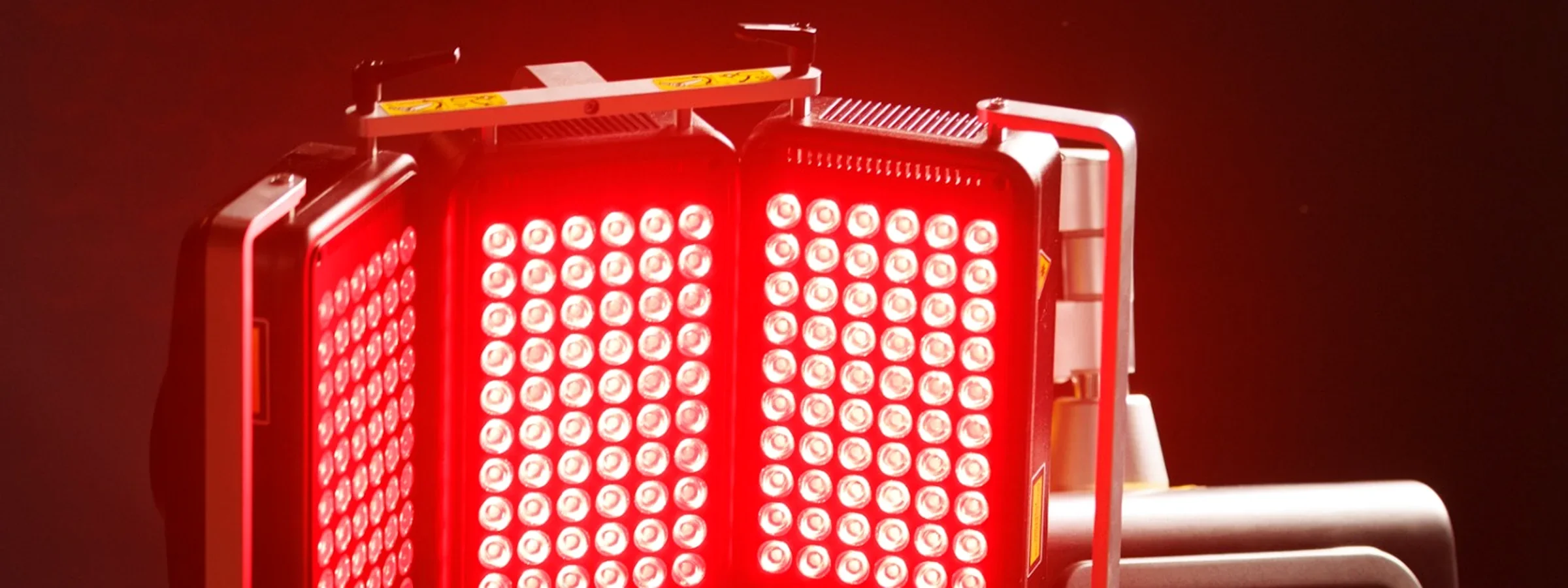
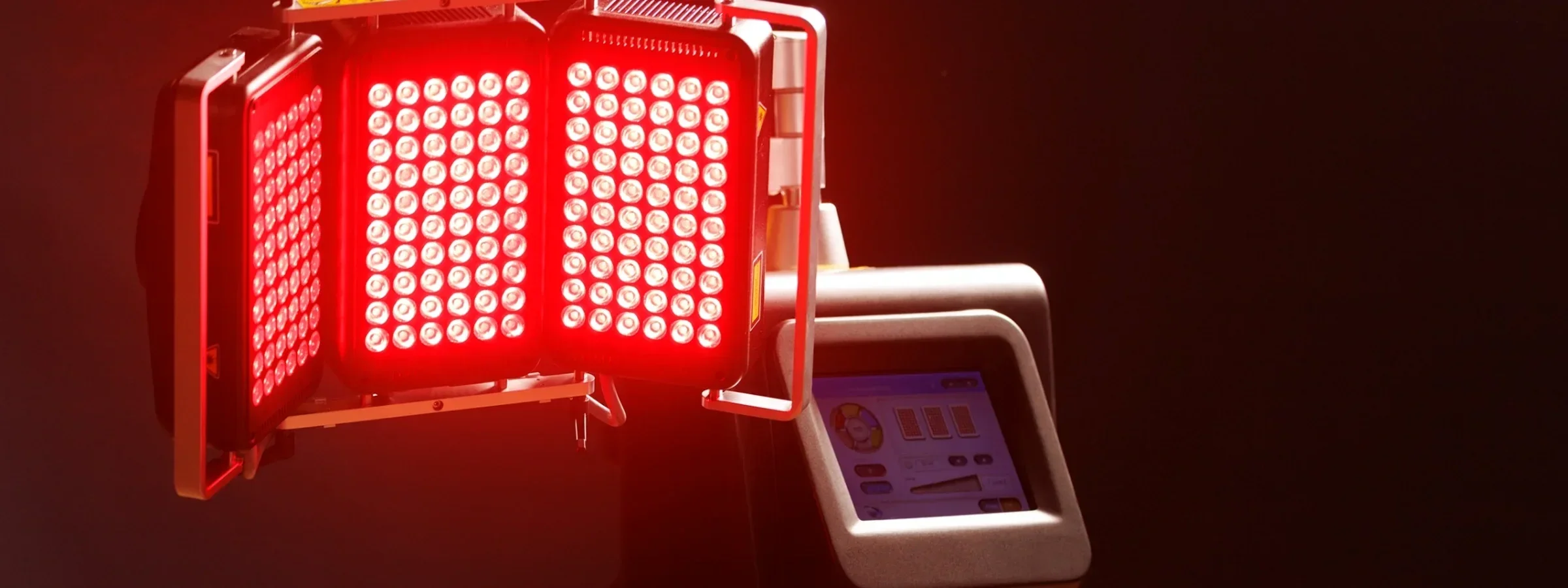
Medical-grade red light
At-home red light masks are designed mainly for general skin care. In-office LLLT uses a medical-grade red light and near-infrared light panel with stronger, more consistent energy output as part of a dry eye treatment plan for meibomian gland dysfunction, inflammation, and ocular rosacea.
Gentle treatment
Red light therapy is non-invasive, comfortable, and typically has no downtime.
Part of a treatment series
LLLT can stand alone, but it is also a key part of our IPL + RF + LLLT series for dry eye and MGD.
Why red light therapy can help dry eye
Most dry eye symptoms are not caused by a lack of tears alone. In many patients, the oil-producing meibomian glands in the eyelids are clogged, inflamed, or producing oil that is too thick. When this oil layer is unhealthy, tears evaporate too quickly.
That can lead to burning, watering, redness, irritation, contact lens discomfort, and fluctuating vision.
Red light therapy helps by supporting the tissue environment around the meibomian glands. The goal is to calm inflammation, improve circulation, support cellular repair, and help create a healthier environment for gland function.
This matters because meibomian gland dysfunction is not just a “clogged pipe” problem. The glands may be blocked, but the surrounding eyelid tissue is often inflamed, irritated, and under stress. Red light therapy helps support the eyelid tissue so that gland expression and long-term tear film stability can improve.
Red light therapy and photobiomodulation
Photobiomodulation is the science behind red light therapy. Instead of using heat to soften oil or intense pulses of light to target blood vessels, LLLT uses medical-grade red light and near-infrared light to support normal cellular function.
When red light and near-infrared light reach the eyelid and facial tissues, the light energy can be absorbed by cells and influence the way those cells respond to inflammation, stress, circulation, and tissue repair.
For dry eye and MGD, the goal is not simply to shine red light on the skin. The goal is to use a medical-grade red light and near-infrared light panel to support a healthier environment around the meibomian glands.
A healthier eyelid environment can help:
Calm chronic eyelid inflammation
Support circulation around the glands
Improve tissue recovery after treatment
Help the glands respond better to expression
Support a healthier oil layer in the tear film
Red light therapy works best when it is matched to the patient’s exam findings, gland function, oil quality, skin type, ocular rosacea, and level of inflammation.
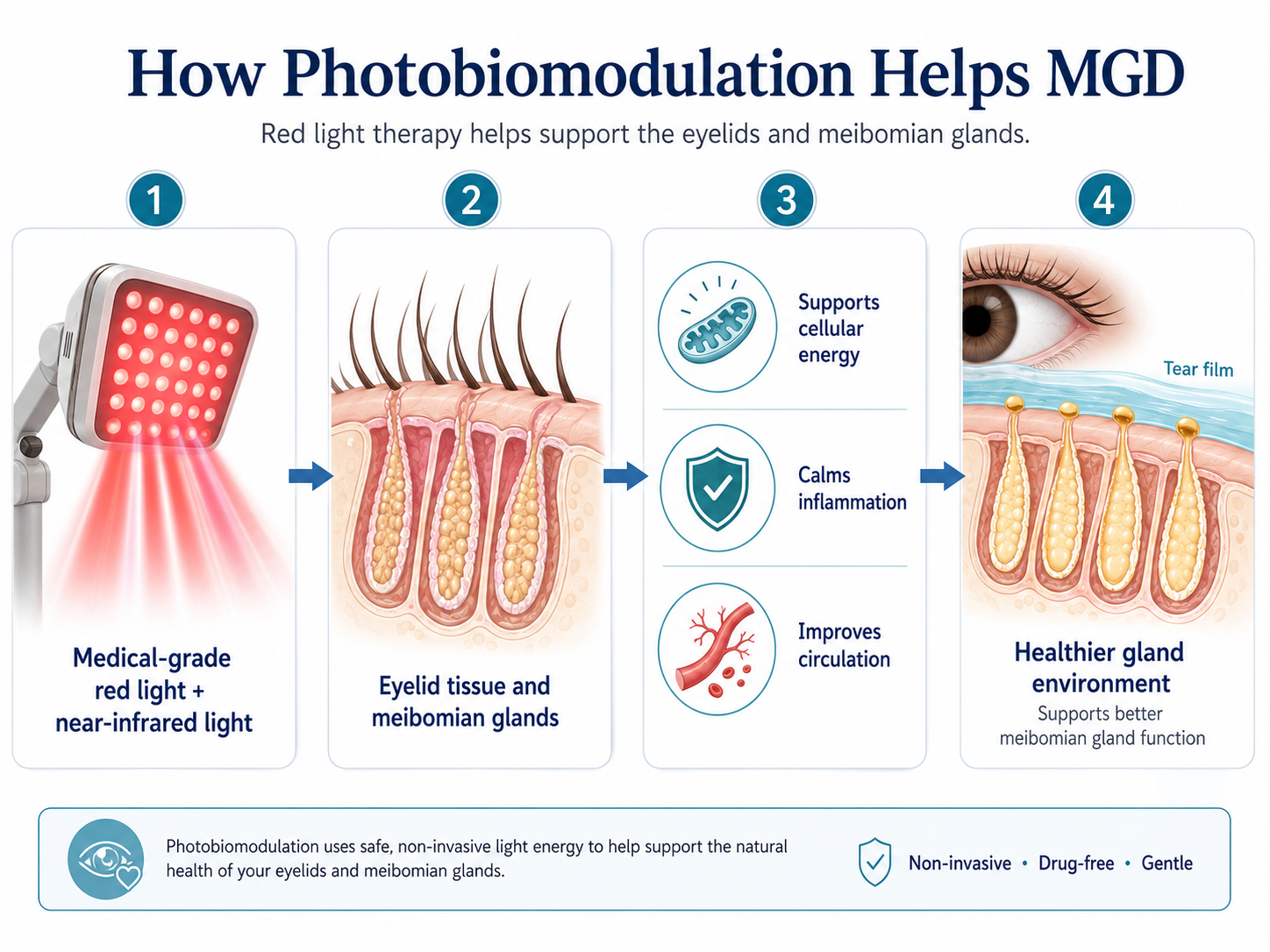
Photobiomodulation uses medical-grade red light and near-infrared light to support cellular energy, calm inflammation, improve circulation, and create a healthier environment around the meibomian glands.
How red light therapy helps meibomian gland dysfunction
Meibomian gland dysfunction happens when the oil glands in the eyelids stop working properly. The oil may become thick, cloudy, waxy, or difficult to express. Over time, chronic inflammation can make the gland environment worse.
Red light therapy helps MGD by supporting the tissues around the glands, not by forcing the glands open. Medical-grade red light and near-infrared light help calm inflammation, support circulation, and improve the cellular environment around the eyelids and meibomian glands.
This is where red light therapy and meibomian gland expression work well together. LLLT helps improve the tissue environment around the glands, while expression helps physically clear thickened, stagnant, or waxy oil from the glands. The goal is to help the oil flow more normally into the tear film.
For LLLT-only treatment plans, we typically perform a series of six red light therapy sessions. Meibomian gland expression is often included during the series, although it may not be performed at every visit. The timing depends on the gland appearance, oil quality, inflammation level, and patient comfort.
This combination is important because MGD usually involves both poor oil flow inside the glands and inflammation around the glands. Red light therapy supports the gland environment; expression helps clear the gland contents.
In patients with mild MGD, LLLT and expression may be enough to improve gland function and tear film stability. In patients with more chronic gland blockage, ocular rosacea, or significant inflammation, red light therapy may be used as part of a broader IPL + RF + LLLT treatment series.
Is this the same as an at-home red light mask?
Not exactly.
Many patients are familiar with red light therapy because at-home LED masks and panels have become popular for skin care, acne, redness, and collagen support. Those devices use the same broad concept of light-based photobiomodulation, but an in-office dry eye treatment is different.
In our office, we use medical-grade red light and near-infrared light as part of a targeted treatment plan for meibomian gland dysfunction, ocular rosacea, eyelid inflammation, and tear film instability.
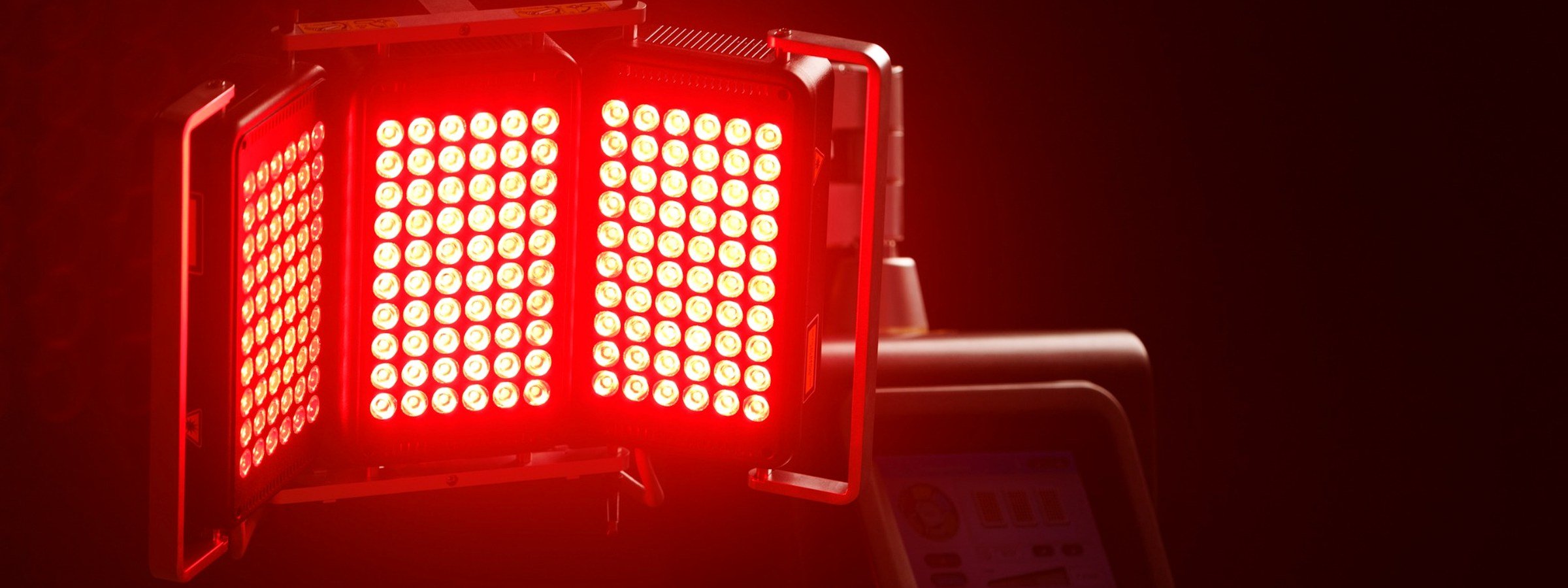
The main difference is not that the light is aimed at one tiny spot. Our LLLT system uses a treatment panel that exposes the eyelids and surrounding facial tissues to therapeutic light. The distinction is the energy output, consistency, wavelength control, and clinical treatment setting. Medical-grade in-office red light therapy delivers a stronger and more controlled treatment than most at-home red light masks or cosmetic LED devices.
Your treatment is also guided by your exam findings, including your meibomian gland structure, oil quality, tear film stability, eyelid inflammation, ocular rosacea, skin type, and medical history.
At-home red light devices may be useful for some cosmetic goals, but they are not designed to diagnose or treat meibomian gland dysfunction. Medical-grade red light therapy for dry eye is focused on improving the environment around the eyelids and meibomian glands.
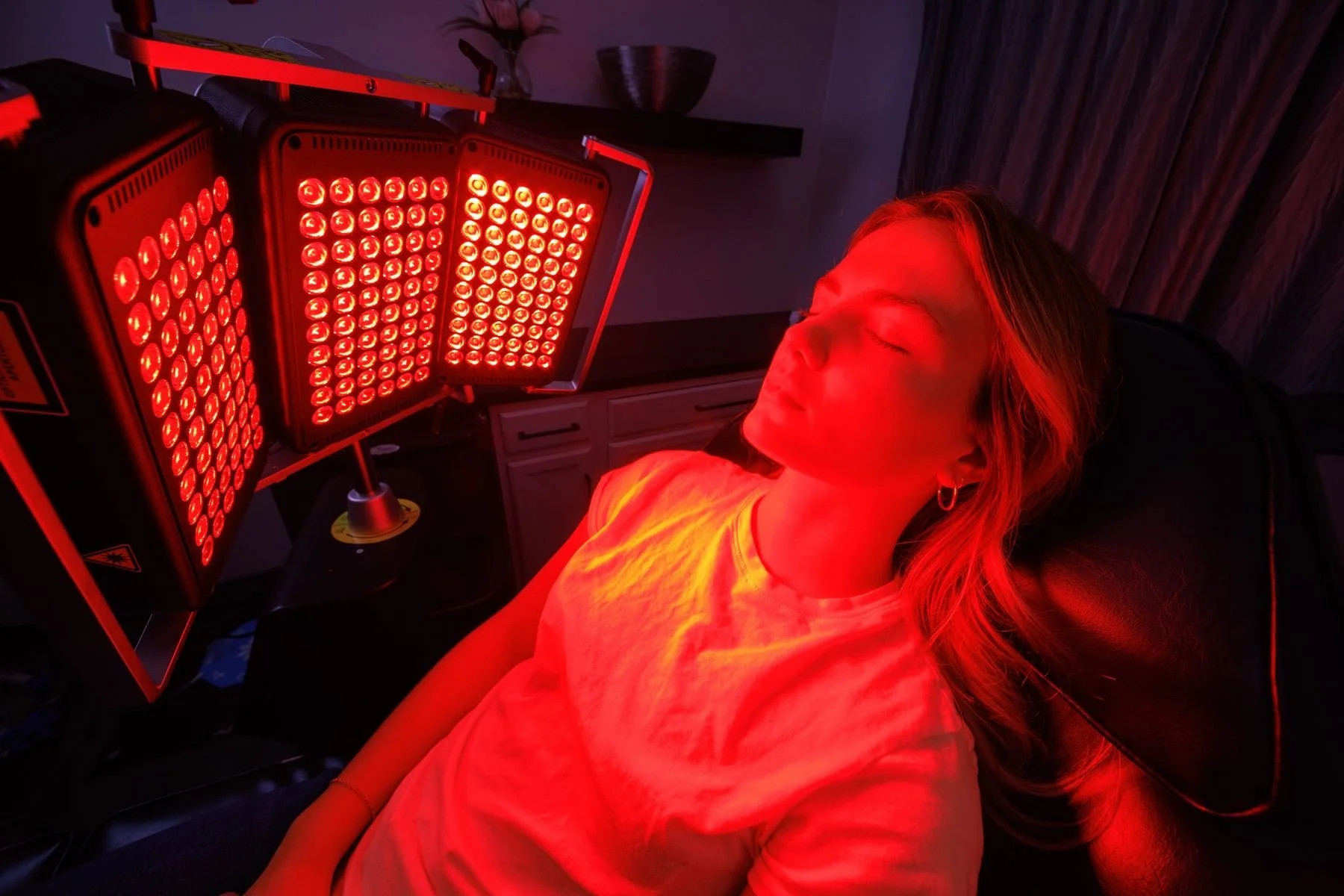
Who may benefit from red light therapy?
Red light therapy may be recommended in two different ways.
As a standalone treatment
LLLT may be used by itself for patients with mild meibomian gland dysfunction, early inflammation, recurrent chalazia, or dry eye symptoms where a gentle, non-invasive treatment is appropriate.
It may also be considered for patients who are not ideal IPL candidates because of skin type, medical history, photosensitivity concerns, or other risk factors.
As part of combined care
For many patients, red light therapy is used as part of a complete IPL + RF + LLLT treatment series.
In that setting, LLLT helps support tissue recovery, inflammation control, circulation, and a healthier environment around the meibomian glands.
Red light therapy may be helpful for patients with:
Evaporative dry eye
Ocular rosacea
Eyelid inflammation
Thickened or waxy meibomian gland oil
Recurrent styes or chalazia
Contact lens discomfort related to dry eye
Patients needing a gentler alternative to IPL
What happens during red light therapy?
LLLT is performed in the office while you sit comfortably. Contact lenses are removed before treatment, and the eyelids and face should be clean and free of makeup, creams, lotions, or oils.
The red light therapy device is positioned close to the face to deliver medical-grade red light and near-infrared light. Because the light is bright, ocular shields may be used for comfort and eye protection.
Most sessions last about 10–20 minutes. Patients may feel gentle warmth, and most tolerate the treatment well.
After treatment, there is typically no downtime. Some patients notice mild temporary warmth or redness, which usually fades quickly. Most patients return to normal activities right away.
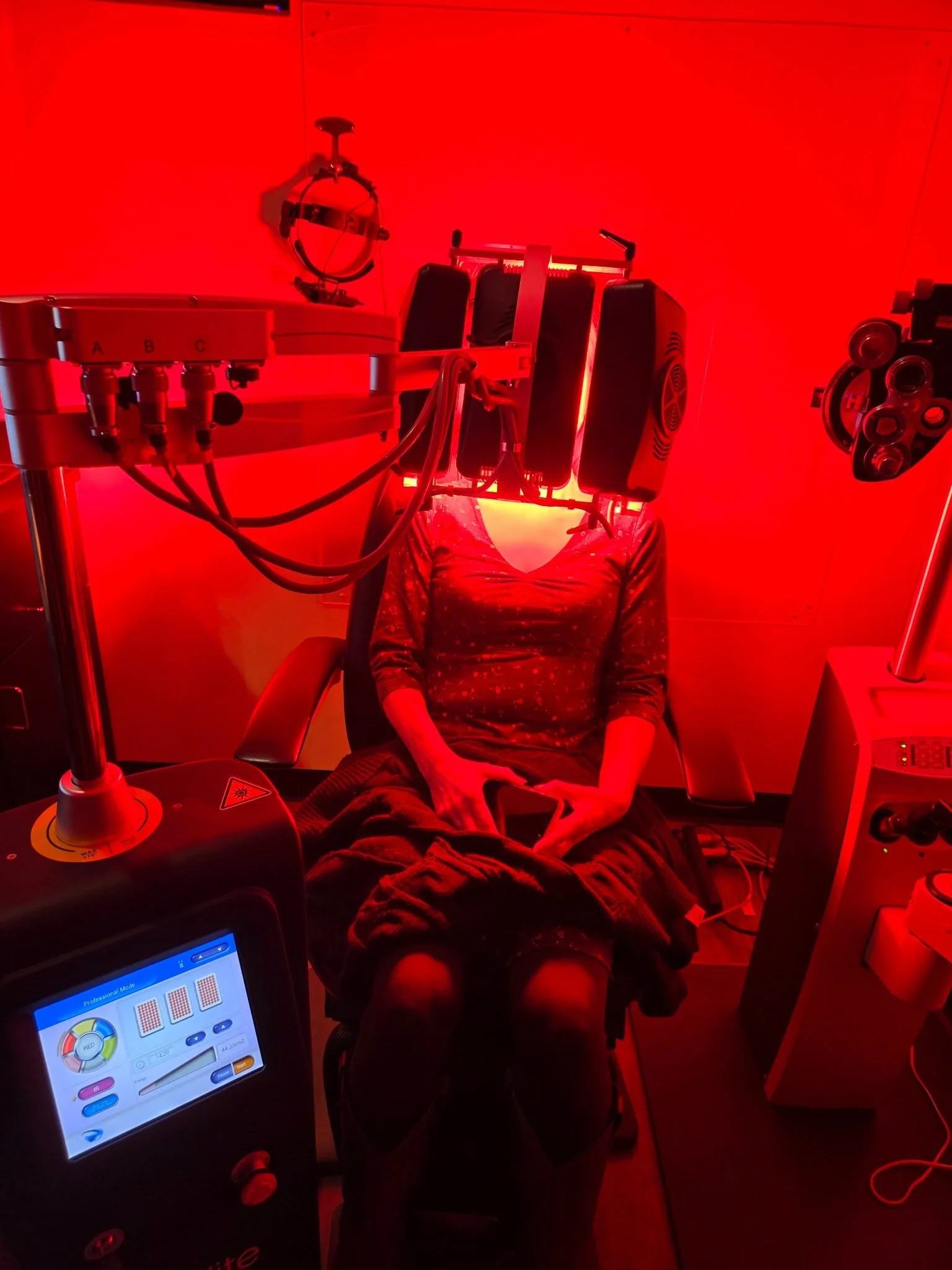
Treatment feel: Warm, gentle, relaxing
Typical session: 10–20 minutes
Downtime: Usually none
Best results: Usually a treatment series
For a broader overview of what to expect before, during, and after treatment, visit our page on What Happens on Dry Eye Treatment Day
How many red light therapy sessions are needed?
Red light therapy is usually performed as a series rather than a one-time treatment. For patients receiving LLLT-only treatment, our standard protocol is typically six sessions.
Meibomian gland expression is also commonly included during the LLLT treatment series. Expression may not be performed at every session, but it is usually performed at select visits to help clear thickened or stagnant oil from the glands.
Some patients with mild MGD may respond well to LLLT and expression alone. Patients with more chronic gland blockage, ocular rosacea, or significant inflammation may benefit from a combined IPL + RF + LLLT treatment plan.
Because dry eye and MGD are chronic conditions, some patients also benefit from maintenance treatment over time.
Red light therapy may also offer cosmetic crossover benefits, including support for skin tone, redness, collagen activity, and overall skin rejuvenation.
Red light therapy and skin benefits
Our primary reason for using red light therapy is medical dry eye treatment. The goal is to improve the eyelid and gland environment, reduce inflammation, and support a healthier tear film.
However, red light therapy is also used in aesthetics because photobiomodulation can support skin recovery, circulation, redness reduction, collagen activity, and general skin rejuvenation.
Patients may notice secondary skin benefits, especially when ocular rosacea, facial redness, or inflammation is part of their dry eye picture. These cosmetic effects are not the main reason we recommend LLLT, but they can be a welcome crossover benefit.
The medical goal remains healthier eyelid tissue, better meibomian gland function, and improved tear film stability.
Is red light therapy safe?
Red light therapy is generally well tolerated, comfortable, and non-invasive. Most patients do not need downtime after treatment.
Because LLLT is still a light-based medical treatment, we review your health history, medications, eye history, skin sensitivity, and any conditions that could make red light therapy inappropriate.
Patients with photosensitivity, or a history of pigment changes
These patients need careful evaluation before any light based treatment. Red light therapy may still be an option, but it should be recommended based on an exam rather than a generic at-home device claim.
LLLT may not be recommended for patients who:
Are pregnant or breastfeeding
Have active eye infections or skin conditions in the treatment area
Are highly sensitive to light
Take medications or supplements that increase photosensitivity
Have a history of light-induced seizures
Have certain retinal conditions or eye diseases
Have light-induced migraines
Have used oral retinoids such as Accutane
Have certain cancer histories
Have autoimmune or photosensitive disorders
Before recommending LLLT, we review your medical history, eye history, medications, supplements, photosensitivity risk, and prior response to light-based treatments.
Why red light therapy is part of our IPL + RF + LLLT series
Meibomian gland dysfunction is rarely caused by one single problem. The glands may be clogged, the oil may be thickened, the eyelid tissue may be inflamed, and ocular rosacea may be driving ongoing redness and irritation.
That is why we often combine treatments.
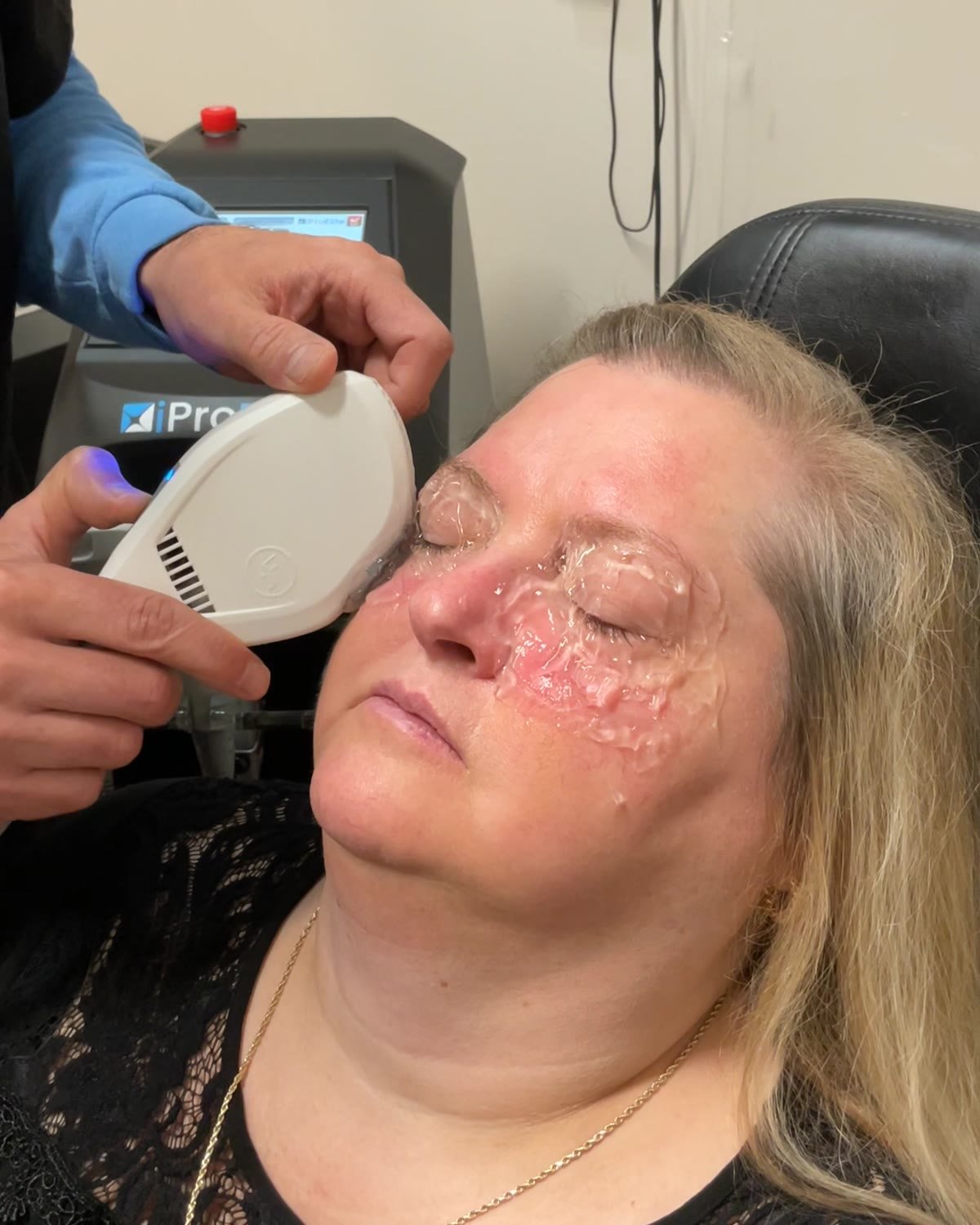
IPL helps reduce inflammatory and vascular drivers.
IPL is especially helpful when ocular rosacea, facial redness, lid inflammation, and abnormal blood vessels are contributing to dry eye.
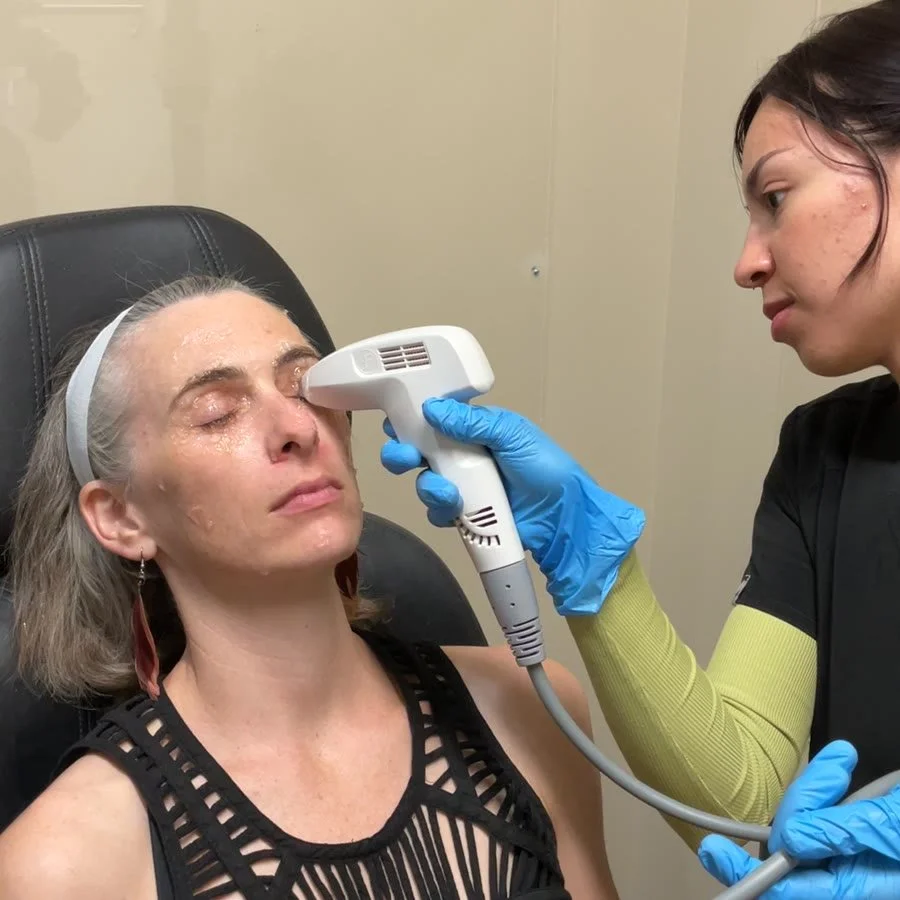
RF helps soften thickened gland oil.
Radiofrequency uses controlled warmth around the eyelids and face to help soften thickened meibomian gland oil and support gland expression.

LLLT uses red light therapy to support tissue recovery.
Low-Level Light Therapy uses medical-grade red light and near-infrared light to calm inflammation, support circulation, and improve the cellular environment around the glands.
Together, IPL, RF, and red light therapy are designed to work synergistically. The goal is to reduce inflammation, soften the oil, clear the glands, and support healthier gland function over time.
Your Questions, Answered
-
LLLT is non-invasive and does not use heat as the primary treatment mechanism, needles, or direct contact with the eyes. Most patients tolerate the treatment well and may notice mild warmth. Some patients are more sensitive to the brightness of the light, so we review comfort and eye protection during treatment.
-
No. At-home red light masks are usually designed for general skin care. In-office LLLT uses medical-grade red light and near-infrared light as part of a targeted treatment plan for dry eye, MGD, inflammation, and ocular rosacea.
-
Yes, red light therapy can help support the tissue environment around the meibomian glands. It may help reduce inflammation, support circulation, improve tissue recovery, and make gland expression more effective.
-
Sometimes LLLT may be used when IPL is not the best fit, especially in milder cases or when skin type or medical history makes IPL less appropriate. In other patients, red light therapy works best as part of a combined IPL + RF + LLLT treatment series.
-
Each treatment has a different role. IPL helps reduce inflammatory and vascular drivers. RF helps soften thickened meibomian gland oil. Red light therapy supports photobiomodulation, tissue recovery, circulation, and inflammation control. Together, they can create a stronger overall treatment response.
-
Most LLLT sessions take about 10–20 minutes, depending on the treatment plan.
-
Usually no. Most patients return to normal activities immediately after LLLT. Mild warmth or redness can occur but typically fades quickly.
-
For LLLT-only treatment, our standard protocol is typically six sessions. Some visits may also include meibomian gland expression, depending on your gland function, oil quality, and comfort during treatment.
-
Often, yes. For LLLT-only treatment plans, meibomian gland expression is usually included during the treatment series, although not necessarily at every visit. Expression helps clear thickened or stagnant oil, while red light therapy helps support a healthier eyelid and gland environment.
-
Red light therapy may be an option for patients who are not good IPL candidates, but any light-based treatment should be recommended after an exam. Skin type, pigment history, photosensitivity, medications, and eye history all matter.
Find out if red light therapy is right for your dry eye
Dry eye treatment works best when it is based on the cause of your symptoms. If your dryness, burning, watering, redness, or fluctuating vision is related to meibomian gland dysfunction, red light therapy may be part of your treatment plan.
LLLT is recommended after a dry eye evaluation, not simply because symptoms are present. We look at your meibomian gland structure, oil quality, eyelid inflammation, tear film stability, ocular rosacea, and treatment history before deciding whether LLLT, IPL, RF, or a combined treatment series is the best fit.
At Drs. Bare, Basic & Rohm Optometrists, we evaluate your tear film, eyelids, meibomian glands, oil quality, ocular rosacea, and inflammation before recommending LLLT, IPL, RF, or a combined treatment series.
Red light therapy for dry eye in Charlottesville
Drs. Bare, Basic & Rohm Optometrists provides advanced dry eye treatment in Charlottesville, including Low-Level Light Therapy, IPL, RF, and treatment for meibomian gland dysfunction and ocular rosacea. Medical-grade red light therapy may be recommended for patients with MGD, eyelid inflammation, poor meibomian gland oil quality, tear film instability, recurrent chalazia, or dry eye symptoms that have not improved with basic home care alone.