
Radiofrequency for Dry Eye and MGD
Controlled warmth used with IPL, LLLT, and meibomian gland expression to support better gland flow.
Radiofrequency, or RF, is one part of our advanced in-office treatment approach for meibomian gland dysfunction and evaporative dry eye. RF uses controlled warmth around the eyelids and surrounding facial tissue to help soften thickened meibomian gland oil, making gland expression more effective.
At Drs. Bare, Basic & Rohm Optometrists in Charlottesville, RF is typically used together with IPL and LLLT for patients who are good candidates. This combined approach allows us to address several contributors to dry eye at the same visit, including inflammation, poor oil quality, blocked gland flow, and tear film instability.
What is radiofrequency?
Radiofrequency treatment uses high-frequency energy to generate controlled heat in the tissue. During treatment, a handheld applicator is moved over the treatment area to warm the eyelids and surrounding facial skin.
For dry eye treatment, the goal is not simply to warm the skin. The goal is to help warm the area around the meibomian glands, where thickened oil can become stagnant and difficult to express.
When this oil softens, meibomian gland expression may be more effective. This can help clear blocked or poorly flowing glands and support a healthier oil layer in the tear film.


Why RF matters in meibomian gland dysfunction
The meibomian glands produce the oil layer of the tear film. This oil helps slow tear evaporation and keeps the surface of the eye more comfortable between blinks.
In meibomian gland dysfunction, the oil can become thick, waxy, or difficult to move. When the glands do not release oil normally, the tear film evaporates too quickly and dry eye symptoms can worsen.
Radiofrequency helps by adding controlled warmth to the treatment process. This is especially useful when the glands contain thickened oil that needs to be softened before expression.

Meibography helps us evaluate the structure of the meibomian glands. When glands become shortened, irregular, or lost, the oil layer of the tear film may become less stable.
How RF fits with IPL and LLLT
Radiofrequency is one part of our advanced in-office dry eye protocol. We typically do not position RF as a standalone dry eye treatment. Instead, we use it with IPL, LLLT, and meibomian gland expression when a patient is an appropriate candidate.
Each part of the treatment has a different role:
IPL helps address inflammation and ocular rosacea patterns that can contribute to meibomian gland dysfunction.
RF provides controlled warmth to help soften thickened meibomian gland oil and support more effective gland expression.
LLLT uses medical-grade light to support tissue recovery, inflammation control, and meibomian gland function.
For patients whose skin type, medical history, and exam findings make them good candidates, we often recommend the combined protocol rather than choosing only one component. The reason is simple: MGD is usually not caused by only one issue. Inflammation, gland obstruction, poor oil quality, and tear film instability often overlap.
What Radiofrequency feels like during treatment
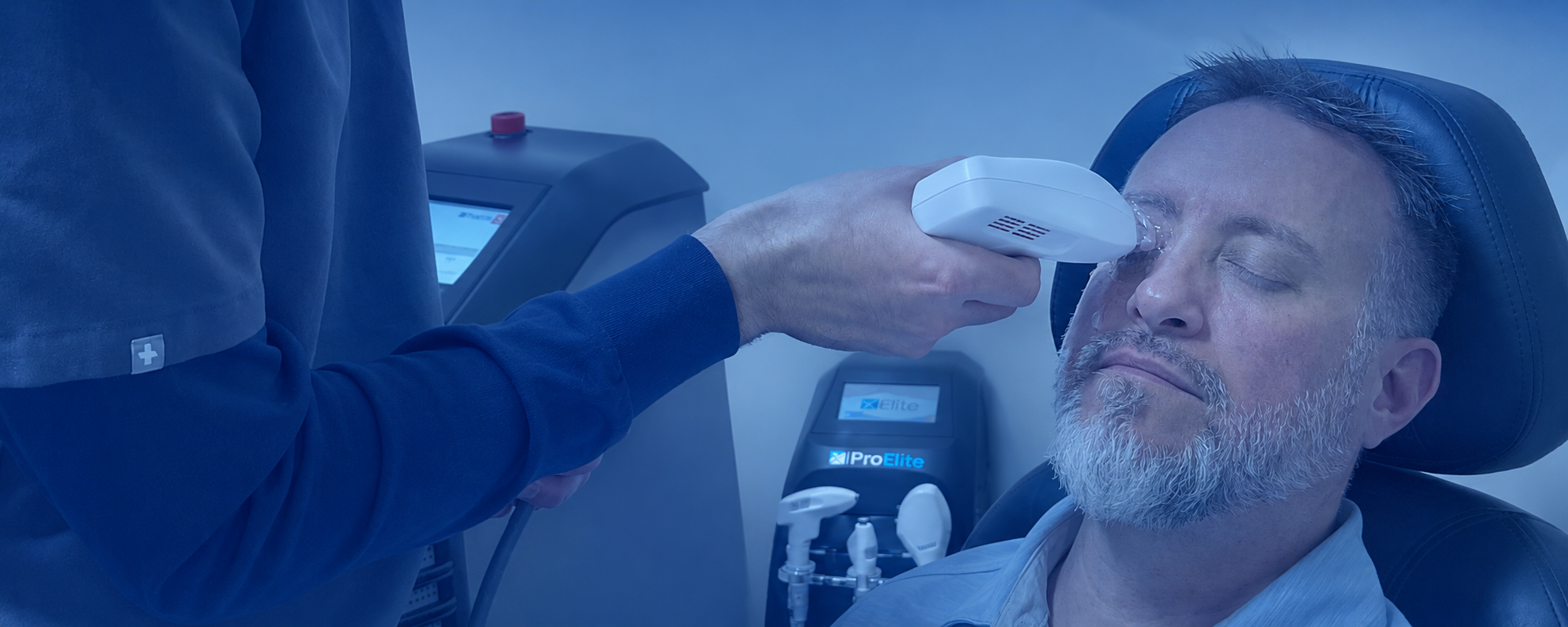
During RF treatment, the skin is cleaned and a gel is applied to the treatment area. A handheld applicator is then moved across the eyelids and surrounding facial areas to deliver controlled warmth.
Most patients describe the treatment as warm rather than painful. The treatment should feel comfortable, and the provider monitors the temperature and your comfort throughout the session.
After RF warming, meibomian gland expression may be performed to help clear softened oil from the glands.
Radiofrequency treatment being performed around the eyelid area for dry eye and MGD
Radiofrequency uses controlled warmth around the eyelids and surrounding facial tissue to help soften thickened meibomian gland oil before expression.
Is RF the same as a heat-and-expression treatment?
Radiofrequency can help warm the eyelids and soften gland oil, but in our office it is not usually used as a standalone heat-and-expression procedure. We typically use RF as part of a broader dry eye treatment plan that may include IPL, LLLT, and meibomian gland expression.
This allows us to address more than just thickened oil. For many patients, inflammation, ocular rosacea, gland obstruction, and poor tear film stability all need to be considered together.
Cosmetic crossover benefits
Radiofrequency is also used in aesthetics because controlled heat can stimulate collagen remodeling in the skin. For some patients, this may create secondary cosmetic crossover benefits around the eyelids and face, such as a smoother or firmer skin appearance.
In our dry eye protocol, however, RF is used primarily for meibomian gland dysfunction and evaporative dry eye. Any cosmetic benefit is secondary to the medical goal of improving gland function, tear film stability, and ocular comfort.

Preparing for Radiofrequency treatment
Before treatment, we review your medical history, medications, skin history, and any factors that may affect treatment safety.
Patients are generally asked to arrive with clean skin and no makeup, lotions, perfumes, or heavy moisturizers on the treatment area. Before treatment, you may also be asked to avoid tanning, self-tanning products, waxing, chemical peels, and certain skin care ingredients.
Please tell us if you have a pacemaker, implantable defibrillator, metal implant, active skin infection, open wound, reduced heat sensitivity, autoimmune disease, uncontrolled diabetes, cancer history, recent Accutane use, pregnancy, breastfeeding, or recent cosmetic injections near the treatment area.
For full appointment instructions, visit our What Happens on Treatment Day page.
After RF treatment
After RF treatment, gentle skin care and sun protection are important. We recommend lukewarm water, mild cleansers, moisturizer for several days, and SPF 30 or higher when outdoors. Temporary warmth, redness, or mild swelling can occur around the treated area and usually improves within a few hours, although mild redness or swelling may last longer in some patients.

Your Questions, Answered
-
In our office, RF is typically used as part of a combined treatment plan with IPL, LLLT, and meibomian gland expression. We may discuss the role of each treatment during your dry eye evaluation, but RF is usually positioned as one part of the full protocol rather than a standalone dry eye treatment.
-
Each technology supports a different part of the dry eye process. IPL helps address inflammation and ocular rosacea. RF provides controlled warmth to help soften thickened gland oil. LLLT uses medical grade light to support tissue recovery and inflammation control. For appropriate candidates, using them together gives us a more complete way to treat MGD.
-
Most patients describe RF as warm and comfortable. The treatment should not feel painfully hot. Your provider monitors your comfort throughout the session.
-
The RF portion of treatment is only one part of the visit. In our combined dry eye protocol, the full treatment visit usually takes about 60 minutes, while the first session may take about 75 minutes because it includes additional preparation and diamond-tip exfoliation.
-
RF can have cosmetic crossover benefits because controlled heat can stimulate collagen remodeling. However, when RF is used in our dry eye protocol, the primary goal is medical: supporting meibomian gland treatment, tear film stability, and dry eye symptom improvement.
-
No. Certain medical conditions, implants, medications, skin conditions, pregnancy/breastfeeding status, recent sun exposure, or recent cosmetic procedures may affect candidacy. We review these factors before recommending treatment.
Find out if Radiofrequency belongs in your dry eye treatment plan
Radiofrequency can play an important role in treating meibomian gland dysfunction when thickened gland oil and poor gland flow are contributing to dry eye symptoms. In our office, RF is usually used as part of a comprehensive protocol with IPL, LLLT, and gland expression.
A dry eye evaluation allows us to examine your meibomian glands, evaluate tear film stability, review your skin type and medical history, and decide whether this combined treatment approach is appropriate for you.
For patients seeking dry eye treatment in Charlottesville, our evaluation helps determine whether IPL, RF, LLLT, and meibomian gland expression are appropriate for your pattern of MGD.