
IPL Dry Eye Treatment in Charlottesville
A light-based treatment for Meibomian Gland Dysfunction, Ocular Rosacea, and Inflammation
For many patients with chronic dry eye, the problem is not simply a lack of tears. The oil glands along the eyelids may be inflamed, blocked, or producing thickened secretions that do not spread well across the tear film.
Intense Pulsed Light, often shortened to IPL, is an in-office treatment that uses controlled pulses of light to help reduce inflammation around the eyelids. In dry eye care, IPL is most often used when meibomian gland dysfunction, ocular rosacea, eyelid redness, and poor oil quality are contributing to symptoms.

Why IPL Is Used for Dry Eye
Meibomian gland dysfunction, or MGD, is one of the most common causes of evaporative dry eye. The meibomian glands produce the oil layer of the tear film. When the glands are inflamed or obstructed, the oil can become thick, cloudy, or waxy. This allows the tears to evaporate too quickly, leading to burning, watering, redness, fluctuating vision, and contact lens discomfort.
IPL is designed to address the inflammatory side of this problem. It is especially helpful when dry eye overlaps with ocular rosacea, facial redness, lid margin inflammation, or visible blood vessels around the eyelids.
The goal is not simply to warm the eyelids. The goal is to calm the inflammatory environment around the glands so the gland secretions can improve over time.
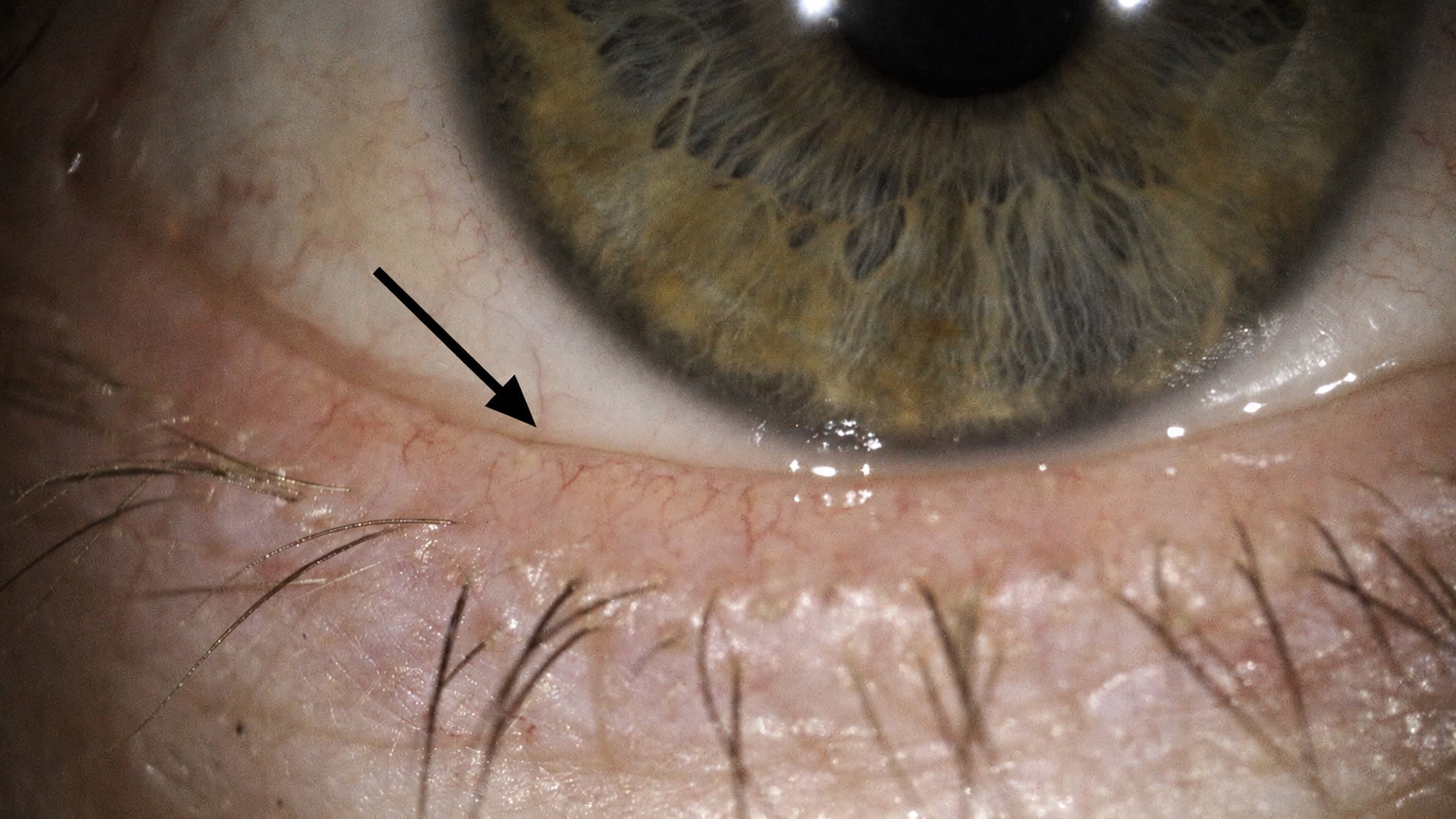
Ocular rosacea and eyelid inflammation contributing to dry eye and MGD
How IPL Works
IPL delivers brief pulses of filtered light to the skin around the eyelids and upper cheeks. The light energy is absorbed by targeted structures in the skin, including abnormal superficial blood vessels that contribute to inflammation.
In dry eye treatment, IPL may help by:
Reducing inflammation associated with ocular rosacea
Decreasing abnormal blood vessel activity around the eyelids
Improving the environment around the meibomian glands
Supporting better meibum quality and gland expression
Helping stabilize the tear film over time
This is why IPL is often recommended for patients whose dry eye symptoms are connected to red eyelid margins, facial rosacea, telangiectasia, thickened gland secretions, or chronic inflammatory MGD.
Inflammation
IPL helps calm inflammatory activity around the eyelids.
Tear Stability
A better oil layer can reduce evaporation and improve comfort.
Oil Gland Function
Healthier gland secretions can spread more evenly across the tear film.
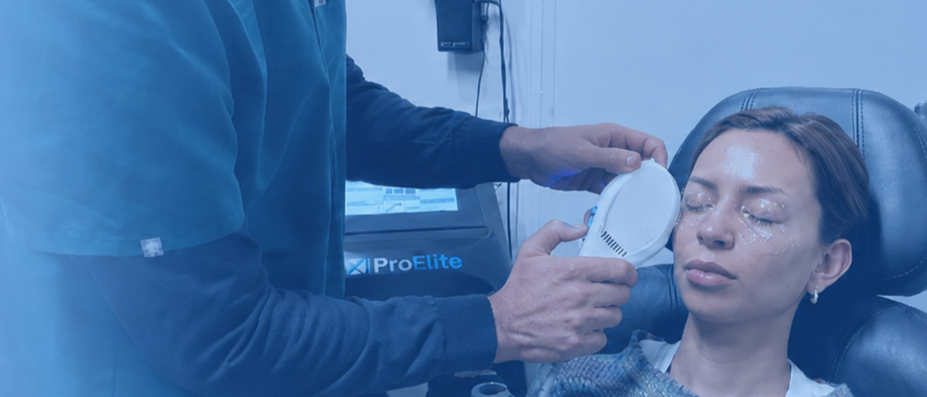
During IPL treatment, light pulses are applied around the eyelids and face while the eyes are protected with opaque shields. IPL helps target inflammation and abnormal surface vessels that can contribute to meibomian gland dysfunction and dry eye symptoms.
Who May Benefit from IPL?
IPL may be considered for patients with dry eye symptoms related to meibomian gland dysfunction and inflammation around the eyelids.
It may be especially useful when exam findings show:
Thickened, cloudy, or waxy meibomian gland secretions
Red or inflamed eyelid margins
Ocular rosacea or facial rosacea
Small visible blood vessels around the eyelids
Tear film instability
Symptoms that persist despite artificial tears, warm compresses, or lid hygiene
Recurrent inflammation around the lids or glands
Not every patient with dry eye needs IPL. Some patients need prescription drops, allergy treatment, Demodex treatment, tear support, lid hygiene, or other therapies. The treatment plan depends on the underlying cause of the symptoms.
IPL may also be used for recurrent styes or chalazia when blocked meibomian glands, thickened oil, eyelid inflammation, or ocular rosacea are part of the pattern. In these cases, IPL can be used as a targeted in-office treatment to calm inflammation around the glands, help restore better gland function, and speed resolution.
These images show two common findings we look for during a dry eye evaluation: thickened meibomian gland oil and changes in the structure of the glands themselves.
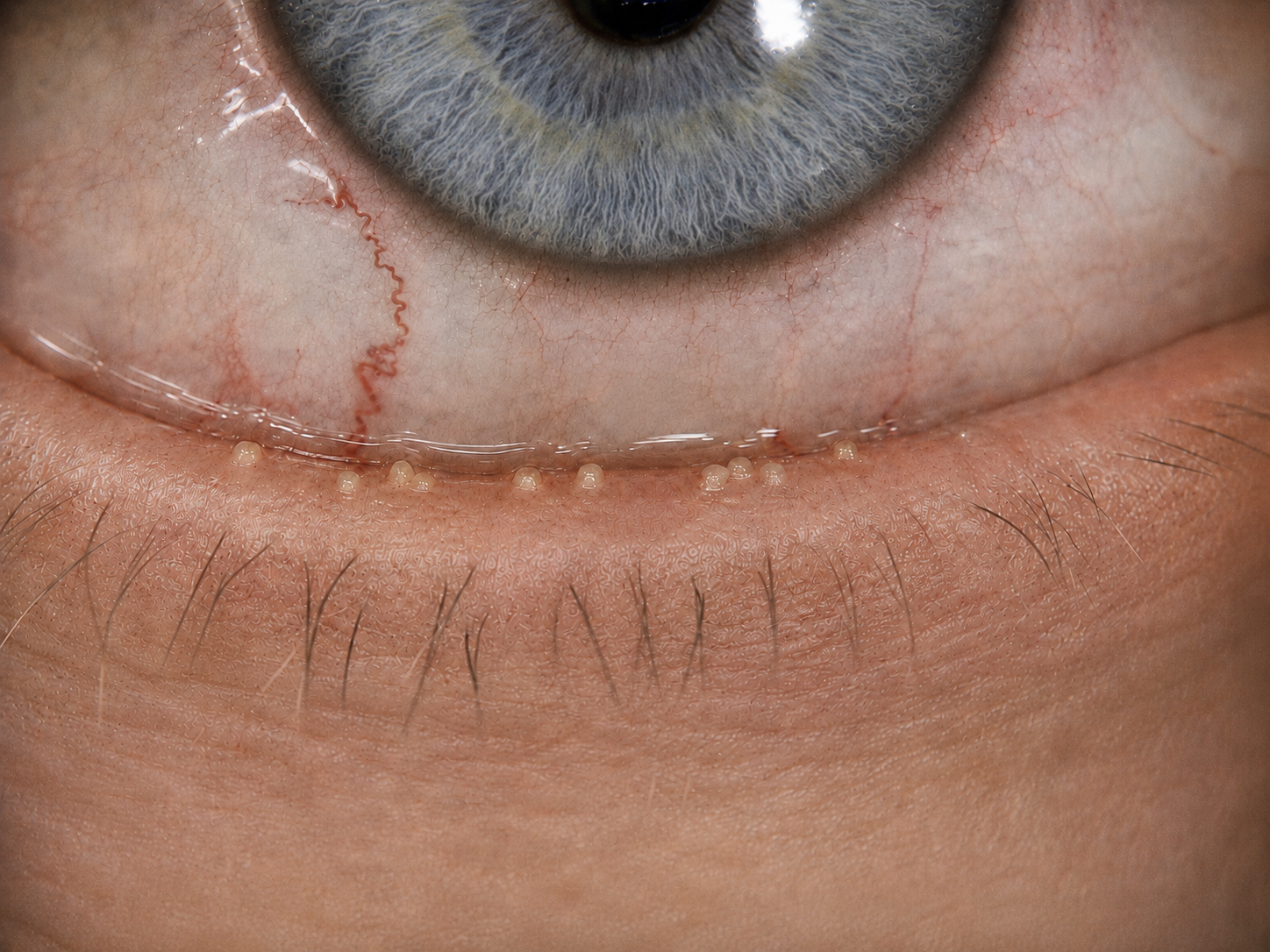
Thickened, waxy meibomian gland oil can block normal gland flow. When the oil becomes cloudy or toothpaste-like instead of clear and fluid, the tear film may evaporate more quickly.
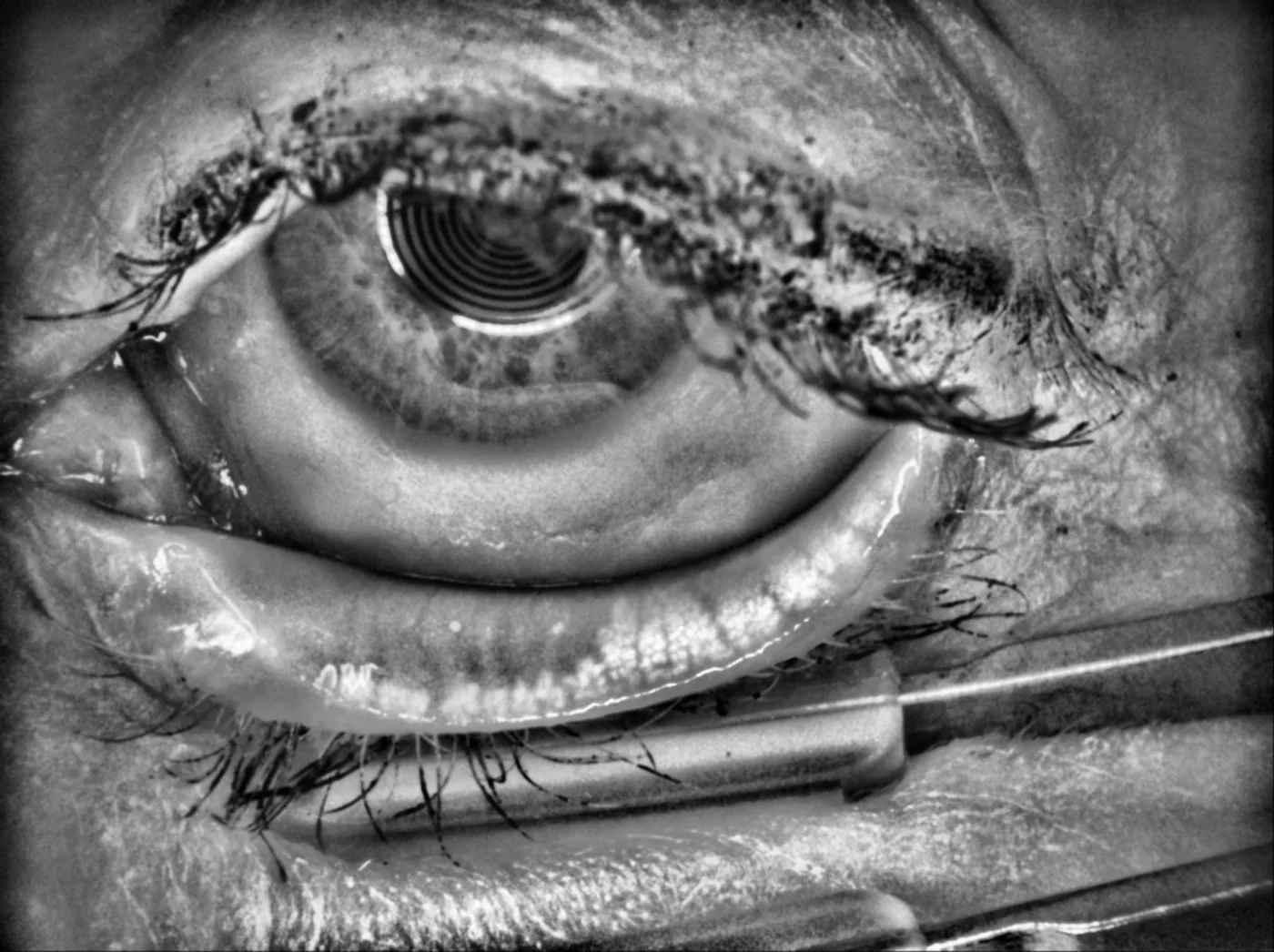
Meibography allows us to evaluate the structure of the meibomian glands. This image shows moderate gland loss, which can reduce the eye’s ability to produce a stable oil layer for the tear film.
Together, oil quality and gland structure help determine whether IPL, RF, red light therapy, expression, prescription treatment, or home care is the best starting point.
Our Evaluation Before IPL
Before recommending IPL, we perform a focused dry eye evaluation to understand what is driving the symptoms. This may include imaging of the meibomian glands, tear film testing, lid margin evaluation, and gentle expression of the glands to assess secretion quality.
We also review skin type, medications, recent sun exposure, photosensitivity risk, medical history, and treatment goals. IPL is effective for many patients, but it is not appropriate for everyone.
During the consultation, we will discuss:
Whether meibomian gland dysfunction is contributing to your dry eye
Whether ocular rosacea or eyelid inflammation is present
Whether IPL is appropriate for your skin type
Whether RF or LLLT should be included
How many sessions are recommended
Pre-treatment and post-treatment instructions
Expected improvement and maintenance planning
Dry eye evaluations are billed to medical insurance when appropriate. IPL, RF, and LLLT treatments are private-pay procedures and are not covered by vision insurance.
What Happens During IPL Treatment?
IPL is performed in the office. Before treatment, the skin is cleaned and a cooling gel is applied to the treatment area, and controlled pulses of light are delivered around the eyelids and upper cheek area.
Most patients describe the sensation as a quick snap, warm pulse, or brief sting. The pulse is very short and usually fades quickly. For treatments around the eyelids, protective shields are used to help protect the eyes during the light-based portion of treatment.
For dry eye and MGD, IPL is typically performed as a series of treatments rather than a one-time procedure. Many patients begin with a series of four sessions spaced about 2–4 weeks apart. Maintenance treatment may be recommended depending on the severity of MGD, ocular rosacea, gland function, and symptom control.
At our office, meibomian gland expression is performed during the treatment series. Expression helps remove thickened oil from the glands after the tissues have been treated and warmed.
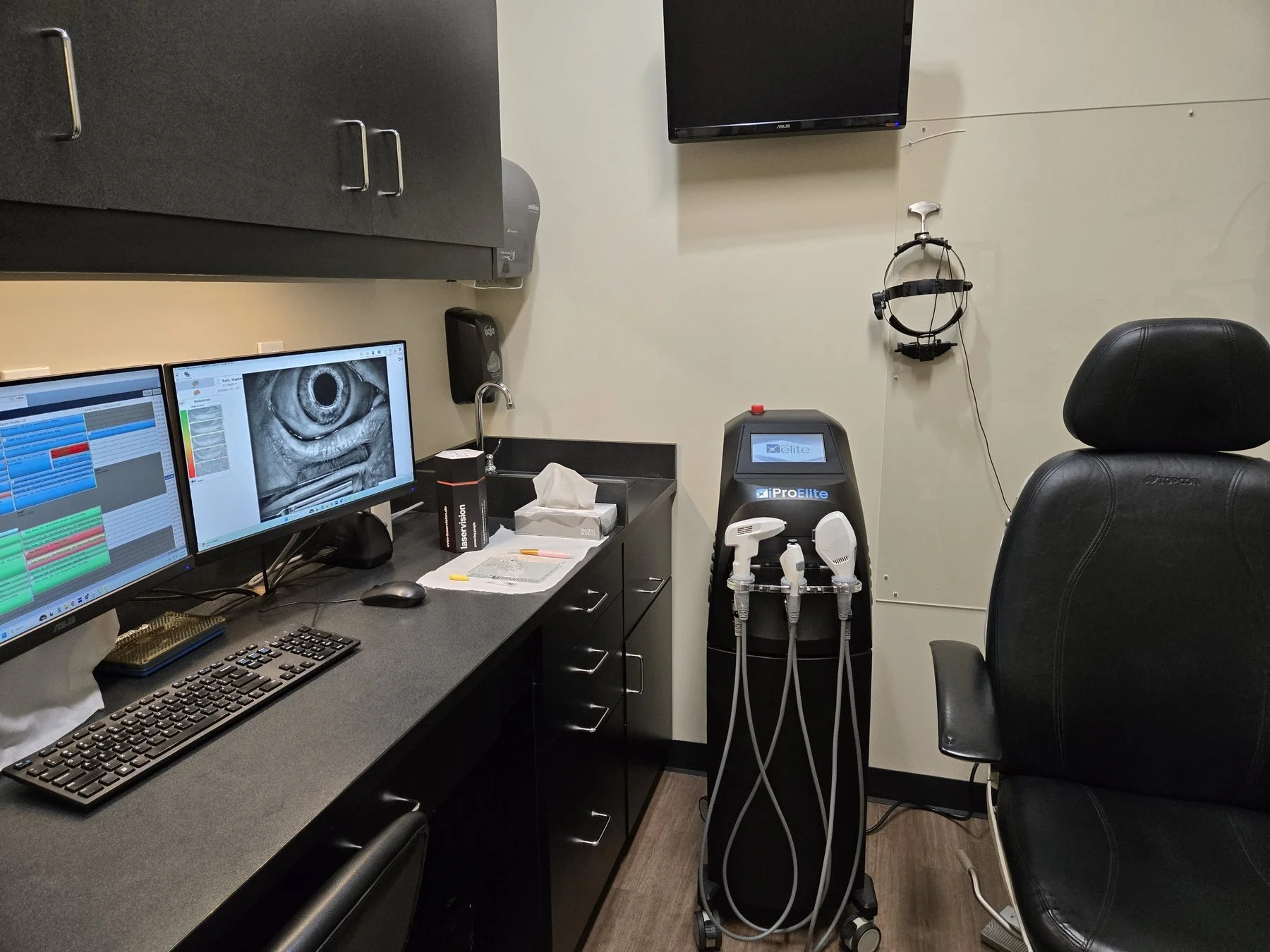
Why We Often Combine IPL, RF, and LLLT
Dry eye from MGD is rarely caused by one simple factor. In many patients, inflammation, gland obstruction, poor oil quality, and ocular rosacea all overlap.
IPL is the part of the treatment plan most focused on inflammation, ocular rosacea, and abnormal blood vessels around the eyelids. Radiofrequency uses controlled heat to soften thickened gland secretions and improve expression. Low-Level Light Therapy, also known as medical-grade red light therapy, uses red and near-infrared light to calm inflammation, support healing, and gently warm the glands.
When appropriate, these treatments can be combined so different parts of the disease process are addressed during the same treatment series.
Not every patient needs every treatment. However, for patients who are good candidates, a combined IPL + RF + LLLT protocol may provide a more complete approach than choosing only one component.
IPL
Targets inflammation, ocular rosacea, and abnormal vessels.
RF
Uses controlled heat to soften thickened oil and improve expression.
LLLT / Red Light Therapy
Uses medical-grade red and near-infrared light to calm inflammation and support healing.
Cosmetic Crossover Benefits
IPL has been used in dermatology for many years. While our primary reason for using IPL is medical treatment of dry eye related to MGD and ocular rosacea, some patients may also notice cosmetic crossover benefits in the treated areas.
These may include improvement in facial redness, small visible vessels, uneven pigmentation, increased collagen production, fine line reduction, and overall skin tone. These cosmetic changes are secondary benefits and are not the main reason we recommend IPL for dry eye.
Our treatment decisions are based first on eye health, gland function, inflammation, symptoms, skin type, and safety.
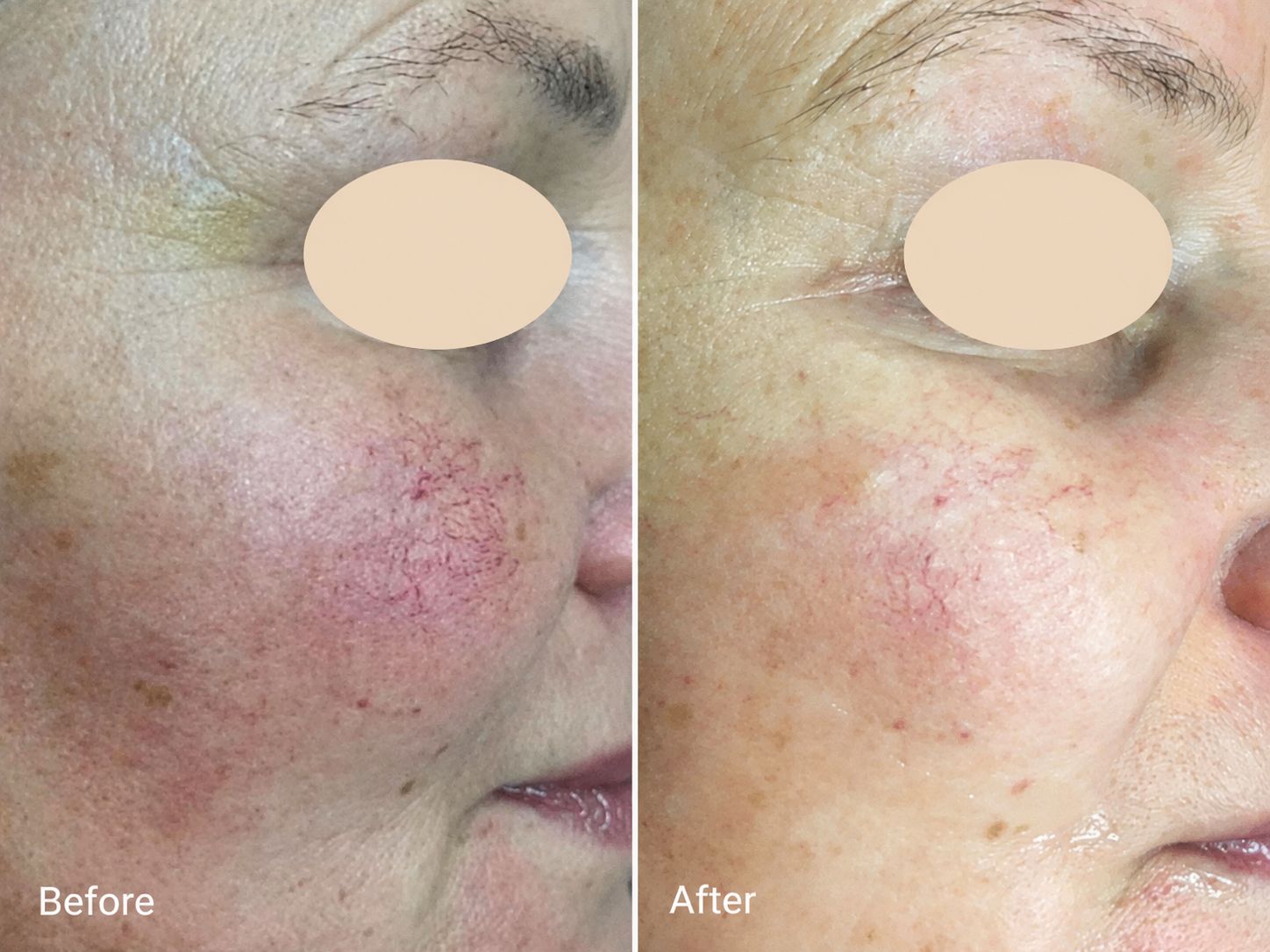
IPL treatment may help facial redness and ocular rosacea as a secondary cosmetic benefit
Preparing for IPL
Because IPL interacts with pigment and light-sensitive skin, preparation matters. We will provide written instructions before treatment, but the most important point is to avoid tanning or increased sun exposure before your session.
Before IPL, patients are typically instructed to AVOID:
Tanning beds
Spray tans or self-tanning products
Intense sun exposure
Waxing near the treatment area
Chemical peels or harsh exfoliating products
Retinoids or photosensitizing medications when instructed by the doctor
Please tell us about any recent: skin treatments, facial procedures, prescription medications, supplements, history of cold sores, photosensitivity disorders, or changes in medical history before treatment.
After IPL Treatment
After IPL, the treated skin may feel mildly warm, similar to a light sunburn. Mild redness or swelling can occur and usually improves within hours to a few days.
After treatment, patients should protect the treated skin, moisturize gently, and avoid irritating products while the skin settles.
Common aftercare instructions include:
Use sunscreen as directed
Avoid tanning and excess sun exposure
Use a gentle cleanser and moisturizer
Avoid harsh scrubs, exfoliants, or aggressive skin treatments
Do not pick or scratch the treated area
Use cool compresses if needed for comfort
Most patients return to normal daily activities quickly. Makeup may usually be worn once the skin is not irritated or broken, but we will give specific instructions based on your skin and treatment response.
Safety and Candidacy
IPL is generally well tolerated when the patient is properly selected and the treatment is performed with appropriate settings and eye protection. During IPL, protective shields are used to reduce risk to the eyes.
IPL may not be recommended for patients with certain skin types, recent tanning, photosensitivity disorders, active skin infections, certain medications, recent facial procedures, pregnancy, seizure history, or other risk factors. Because IPL interacts with pigment in the skin, candidacy is based on more than symptoms alone. As part of IPL screening, we review skin type, recent sun exposure, tanning history, medications, and pigment level. This includes both a visual skin type assessment and a melanin reader measurement to help guide safe treatment settings.
Possible side effects include temporary redness, swelling, warmth, tenderness, bruising, pigment changes, blistering, crusting, or skin irritation. Serious side effects are uncommon but are the reason careful screening and eye protection are important.
If IPL is not the right choice, we may discuss other options such as LLLT, RF, gland expression, prescription therapy, Demodex treatment, lid hygiene, or tear-supporting treatments.
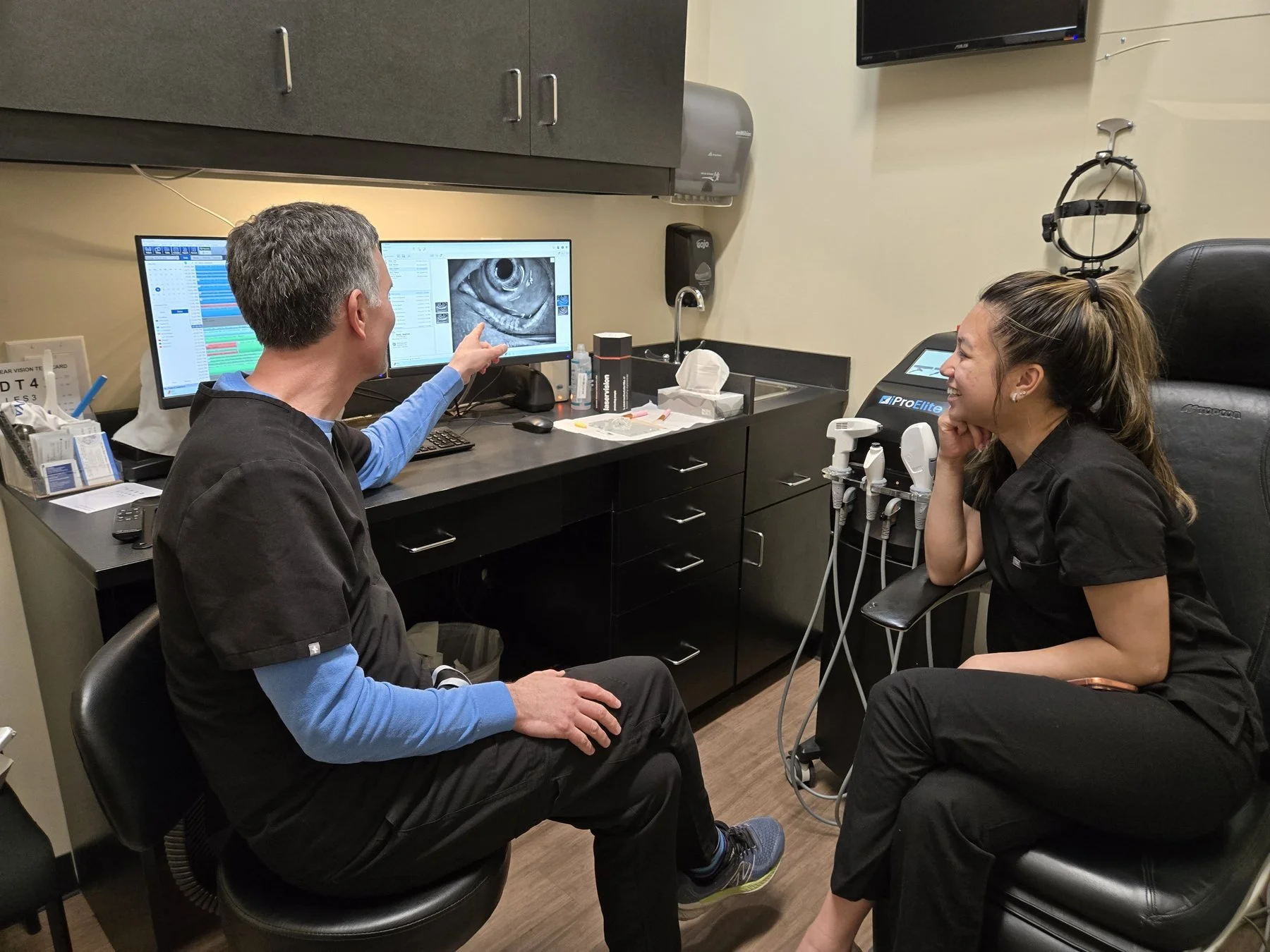
Before IPL treatment, we review dry eye findings, skin type, medications, sun exposure, and other safety factors to determine whether treatment is appropriate.
What IPL Can and Cannot Do
IPL can be an important part of dry eye care, especially when inflammation, ocular rosacea, and poor meibomian gland function are contributing to symptoms.
The goal is to help the glands you still have work better. IPL does not regrow glands that have already been permanently lost, but it may help improve the function of glands that are inflamed, obstructed, or underperforming. When inflammation decreases and thickened oil begins to move more freely, a gland that looked closed, compressed, or poorly visible may appear more open and functional.
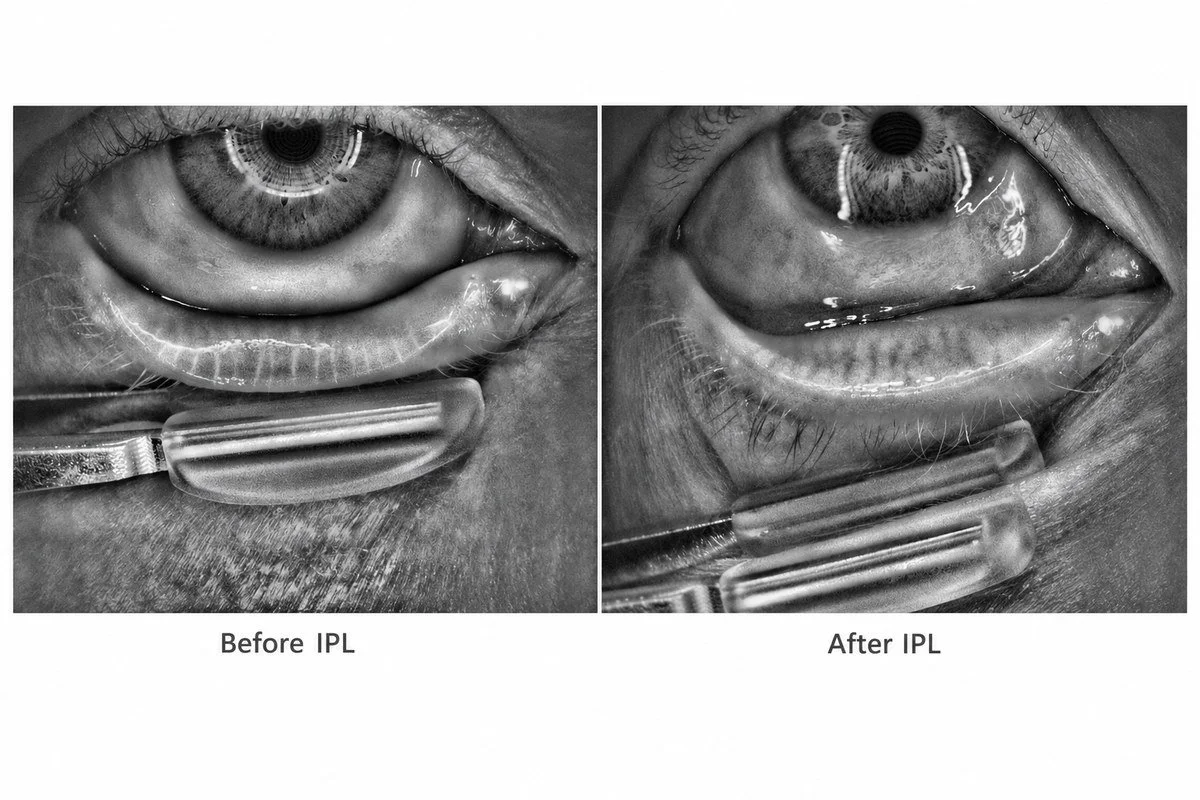
Before and after IPL: the central gland channel appears more open after treatment, and the existing gland looks more visible and functional. IPL does not regrow permanently lost glands, but it may help underperforming glands work better.
This is why earlier treatment matters. Meibomian gland dysfunction is often a chronic condition. If the glands remain blocked and inflamed for long periods of time, they may become less productive and some gland structure can be permanently lost.
IPL is not a permanent cure for MGD, and it does not replace daily home care for many patients. The best results usually come from matching the treatment to the correct diagnosis, reducing the underlying inflammation, improving gland expression, and maintaining the results over time.

Your Questions, Answered
-
The technology is related, but the treatment goal is different. In dry eye care, IPL is used medically to address inflammation, ocular rosacea, and meibomian gland dysfunction. Cosmetic improvements in redness or skin tone may occur, but they are secondary benefits.
-
Most patients begin with a series rather than a single treatment. A typical plan is four sessions spaced about 2–4 weeks apart, followed by maintenance treatment when needed. The exact plan depends on your symptoms, gland function, skin type, and exam findings.
-
Most patients tolerate IPL well. The light pulse may feel like a quick snap, warm pulse, or brief sting. The sensation is short and usually fades quickly.
-
IPL helps treat the inflammatory environment around the glands. Expression helps remove thickened oil from the glands. When these are used together, treatment can address both inflammation and poor gland secretion quality.
-
IPL may be useful when ocular rosacea, eyelid redness, facial redness, or small visible blood vessels are contributing to dry eye and MGD. During the dry eye evaluation, we look for these findings before recommending treatment.
-
IPL near the eyes requires proper screening, settings, technique, and eye protection. Protective shields are used during treatment. Not everyone is a candidate, which is why we review skin type, medications, sun exposure, medical history, and risk factors before treatment.
-
IPL may not be recommended for patients with certain darker skin types, recent tanning, active skin infection, photosensitivity disorders, certain medications, recent facial procedures, pregnancy, seizure history, or other risk factors. If IPL is not appropriate, other dry eye treatment options may still be available.
-
Makeup may usually be worn after the skin has settled and the treated area is not irritated, broken, or blistered. We will provide specific post-treatment instructions based on your treatment and skin response.
-
Dry eye from MGD and ocular rosacea is usually chronic. IPL can improve symptoms and gland function for many patients, but maintenance treatment and home care may still be needed.
Find Out Whether IPL Is Right for Your Dry Eye
If you have burning, watering, fluctuating vision, red eyelids, facial rosacea, or dry eye symptoms that have not improved with artificial tears alone, a focused dry eye evaluation can help determine whether MGD or ocular rosacea is contributing.
At Drs. Bare, Basic & Rohm Optometrists, we evaluate the tear film, eyelids, and meibomian glands before recommending treatment. If IPL is appropriate, we will explain the treatment plan, expected timeline, precautions, and maintenance options.