
Advanced Dry Eye Treatment in Charlottesville
Dry eye is often more complicated than simply “not making enough tears.”
For many patients, the underlying problem is poor tear quality caused by dysfunction of the oil glands in the eyelids. These glands, called the meibomian glands, produce the oil layer of the tear film. When the oil layer is unhealthy, tears evaporate too quickly, vision can fluctuate, and the eyes may feel dry, irritated, burning, gritty, or watery.
At Drs. Bare, Basic & Rohm Optometrists, we evaluate dry eye by looking closely at the eyelids, tear film, and meibomian glands so treatment can be directed at the cause of the problem—not just the symptoms.
Learn more about our dry eye treatment approach
Dry eye treatment is not the same for every patient. Click any of the buttons below to learn more about Meibomian Gland Dysfunction and the in-office treatment options we may recommend.
Why Meibomian Gland Dysfunction Matters
The meibomian glands line the upper and lower eyelids. Their job is to produce a clear, healthy oil that helps stabilize the tear film.
When these glands are inflamed, blocked, or not functioning properly, the oil can become thickened or waxy. Instead of spreading smoothly across the eye, it may stay trapped in the glands or come out poorly. This leads to faster tear evaporation and chronic irritation.
Common symptoms include:
• Burning, stinging, or gritty eyes
• Fluctuating or blurry vision
• Tearing or watery eyes
• Redness or eyelid irritation
• Contact lens discomfort
• Symptoms that worsen with reading, computer use, driving, or dry environments
Meibomian gland dysfunction, often shortened to MGD, is one of the most common causes of evaporative dry eye.
Over time, poorly functioning meibomian glands can become shortened, damaged, or atrophied. This is sometimes called gland dropout. Treatment is aimed at improving the function of the glands that remain, reducing inflammation, and helping preserve healthier gland function over time. Glands that are severely atrophied may not fully recover, which is one reason early diagnosis and management are important.
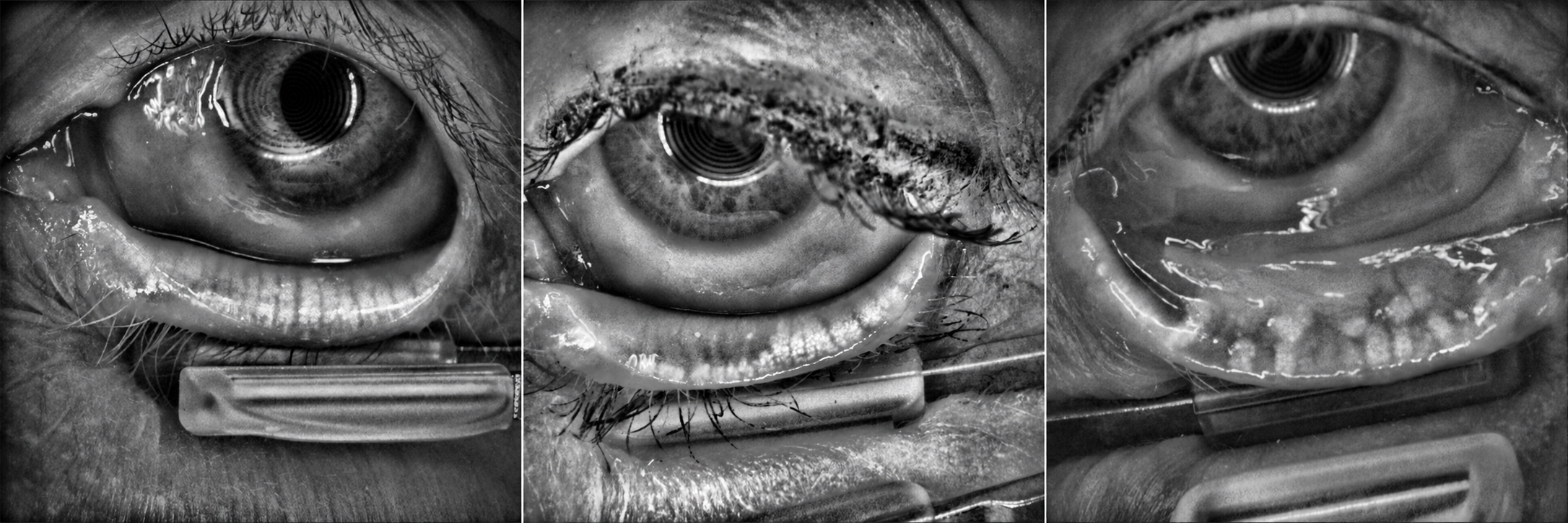
Meibography allows us to evaluate gland structure. These images move from left to right, showing normal meibomian glands followed by increasing gland loss and atrophy, which can reduce healthy oil flow into the tear film.
The Role of Ocular Rosacea
For many patients, meibomian gland dysfunction is made worse by ocular rosacea.
Rosacea can cause chronic inflammation around the eyelids and abnormal blood vessels near the lid margin. Over time, that inflammation can affect the quality and flow of oil from the meibomian glands.
In practical terms, this means the glands may produce thickened, waxy secretions rather than the clear oil needed for proper lubrication.
When we recommend advanced dry eye treatment, the goal is often to address two related problems:
• Reduce the inflammation driving the gland dysfunction
• Improve the quality and flow of oil from the glands
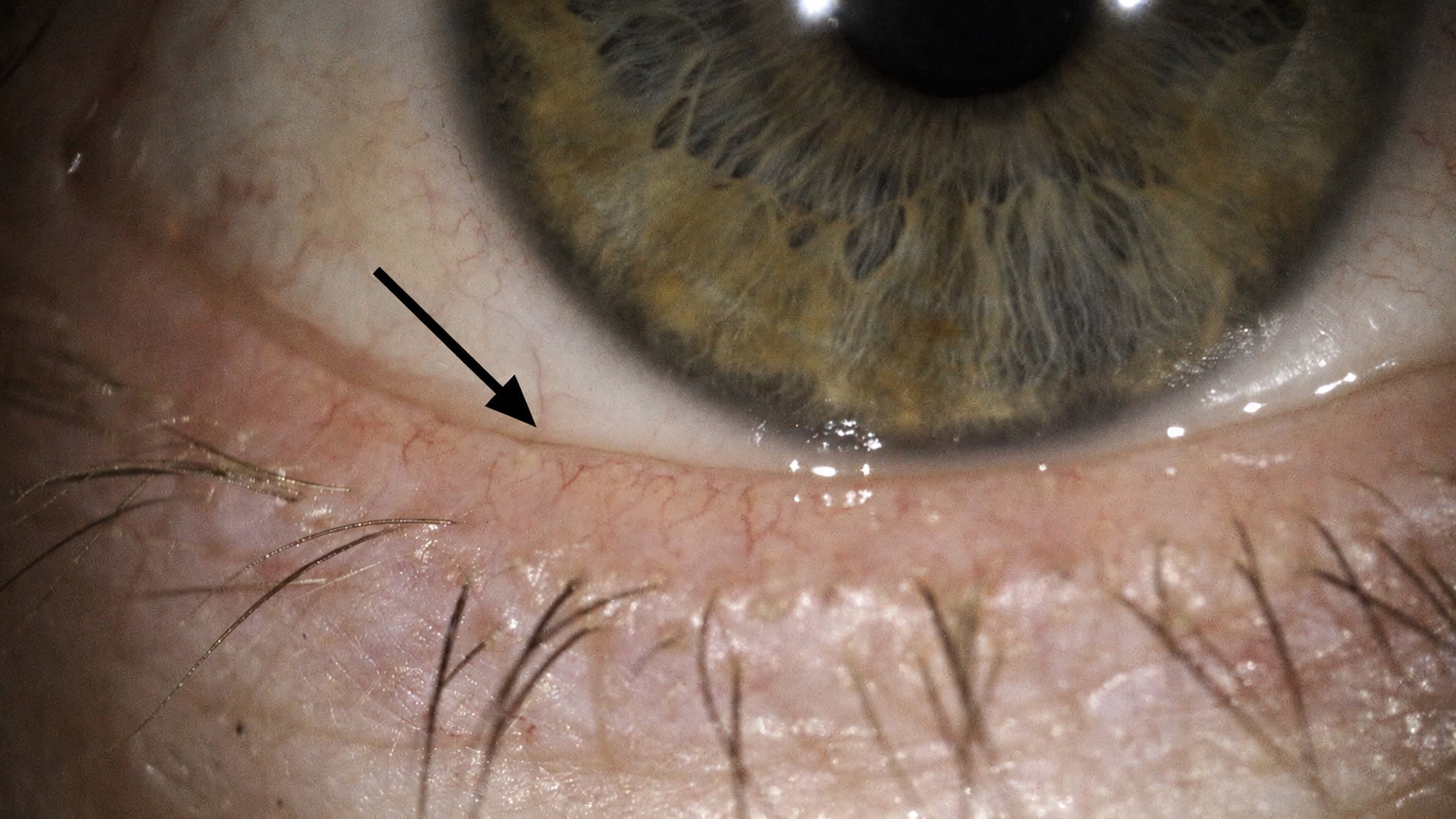
Ocular rosacea can contribute to chronic lid margin inflammation and poor meibomian gland oil quality.

A Focused Evaluation Before Treatment
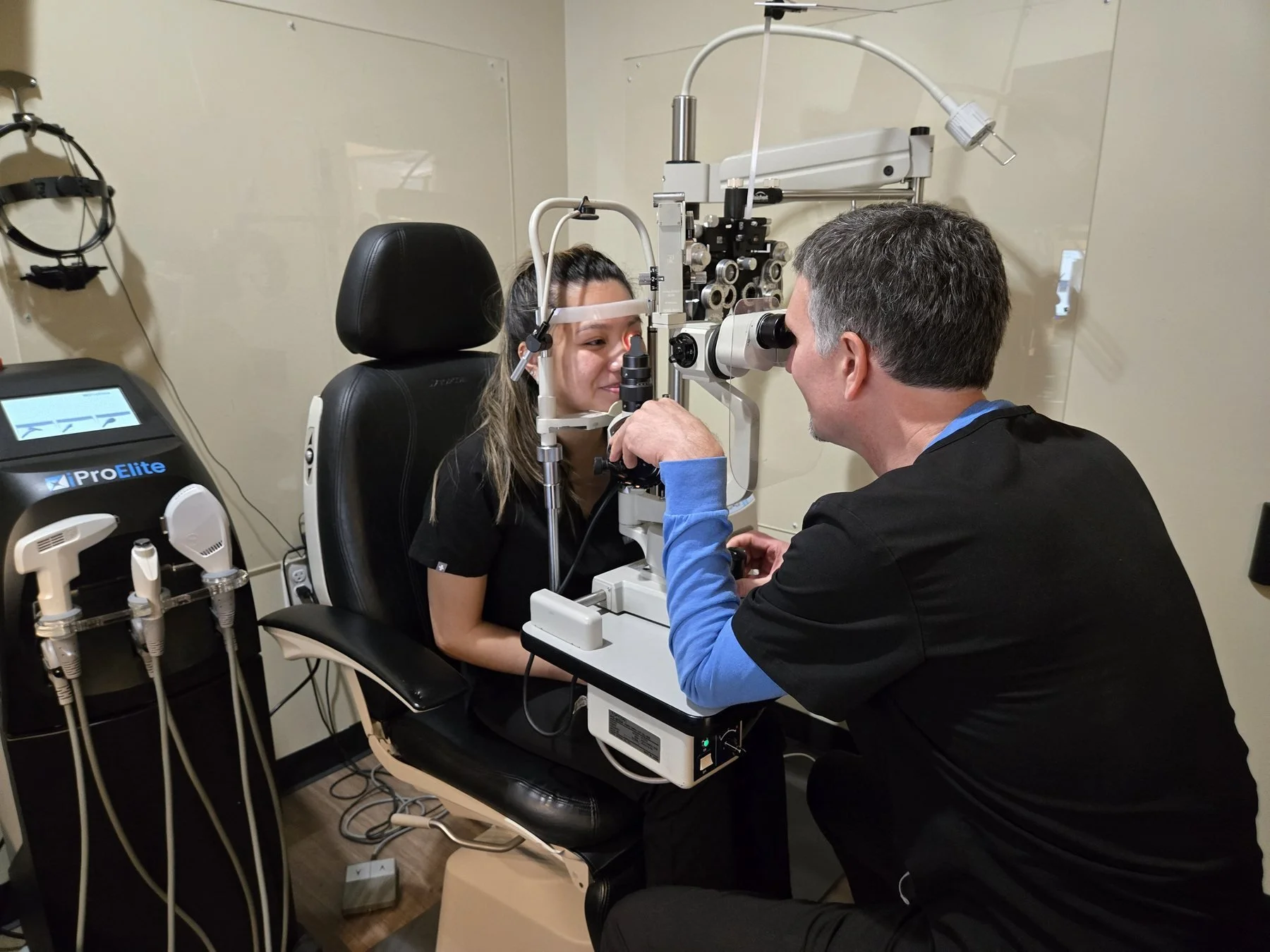
Before recommending treatment, we first evaluate the eyelids, tear film, ocular surface, and meibomian glands.
The goal is to understand what is actually causing your symptoms and choose the most appropriate plan—not simply recommend the same procedure for every patient.
Why Artificial Tears Alone May Not Be Enough
Artificial tears can provide temporary relief, but they usually do not correct the underlying gland dysfunction.
If the oil layer of the tear film remains unhealthy, symptoms often return soon after drops are used.
That does not mean drops are useless. They may still be part of a treatment plan. But for patients with significant meibomian gland dysfunction, ocular rosacea, or thickened gland secretions, we often need to treat the eyelids and glands more directly.
Our Dry Eye Evaluation
A Dry Eye Evaluation is different from a routine eye exam. During this visit, we focus specifically on the ocular surface, eyelids, tear film, and meibomian glands.
Your evaluation may include:
• Meibography to image the structure of the eyelid oil glands
• Tear stability testing, including non-invasive tear break-up time
• Tear volume assessment, including tear meniscus height
• Anterior segment photography to document the eyelids and ocular surface
• Assessment of meibomian gland function and oil quality
• Evaluation of inflammation and ocular rosacea findings
• Discussion of your diagnosis and customized treatment options
The purpose of this visit is to determine what is actually causing your symptoms and choose the most appropriate treatment plan. For some patients, that may include IPL, RF, or LLLT. For others, the best plan may focus on environmental changes, lid hygiene, chronic blepharitis management, prescription medications, or a combination of approaches.
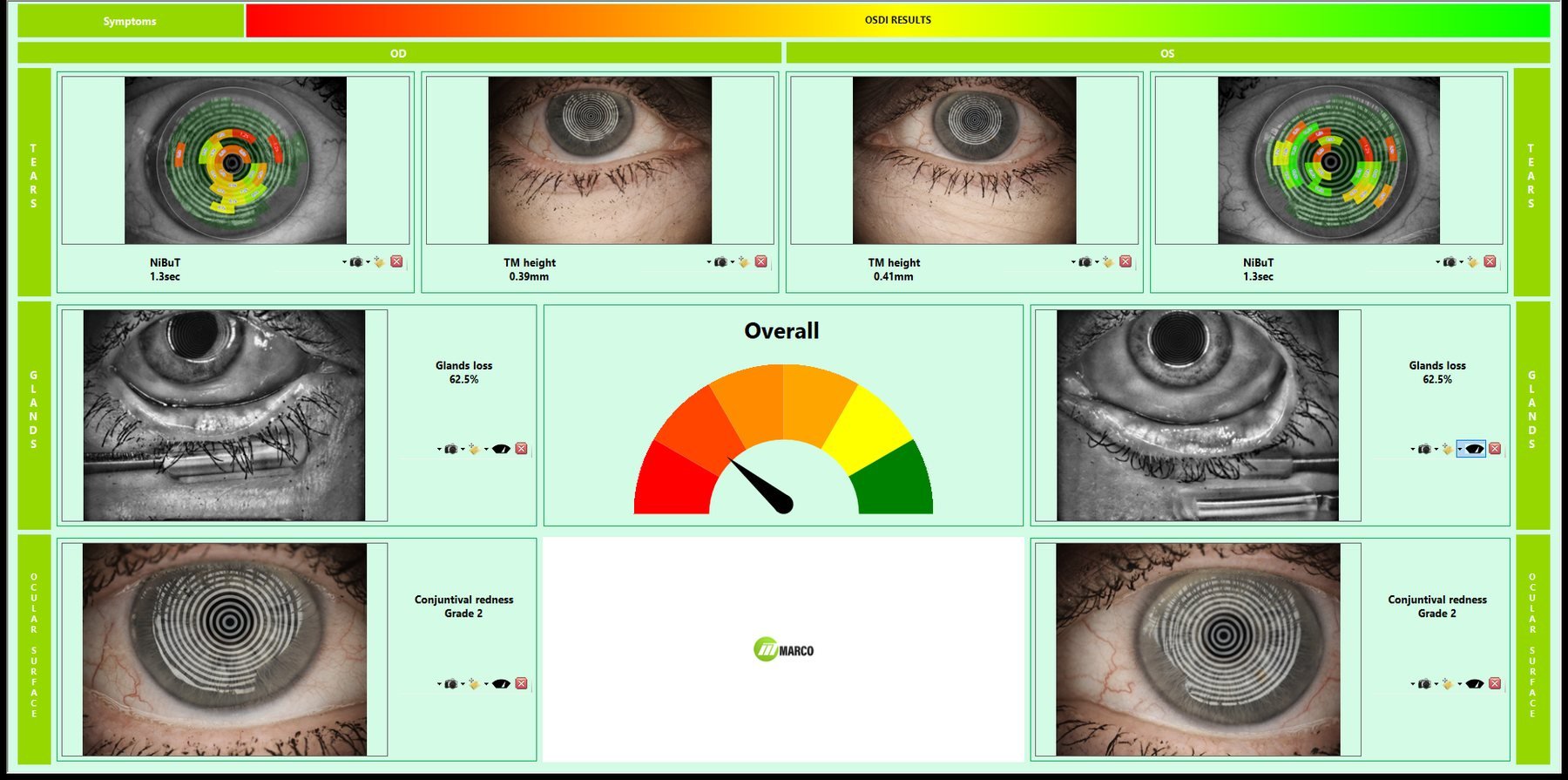
The Marco Phoenix dry eye report helps us review tear stability, gland structure, redness, and ocular surface findings during a focused evaluation.
Treatment Options We May Discuss
Once we understand the cause of your symptoms, we will discuss the treatment options that make the most sense for your specific findings.
For patients with meibomian gland dysfunction, ocular rosacea, and thickened gland secretions, treatment may include advanced in-office procedures such as IPL, RF, or LLLT.
Other treatment plans may focus on environmental and lifestyle changes, warm compresses or lid hygiene, chronic blepharitis management, prescription eye drops or medications, Demodex treatment when appropriate, artificial tears or tear-supporting therapies, or ongoing maintenance care.
The goal is not to recommend the same treatment for every patient. The goal is to identify the source of the problem and choose the most appropriate plan.
Advanced In-Office Dry Eye Treatments
For patients whose dry eye is being driven by meibomian gland dysfunction, ocular rosacea, inflammation, and thickened gland secretions, we may recommend a series of in-office treatments.
These therapies are often used together because meibomian gland dysfunction is rarely caused by one single problem. The glands may be clogged, the oil may be thickened, the eyelid tissue may be inflamed, and ocular rosacea may be driving ongoing redness and irritation.
Each treatment supports the gland environment in a different way.
For patients whose dry eye is being driven by meibomian gland dysfunction, ocular rosacea, inflammation, and thickened gland secretions, we may recommend a series of in-office treatments.
These therapies are often used together because meibomian gland dysfunction is rarely caused by one single problem. The glands may be clogged, the oil may be thickened, the eyelid tissue may be inflamed, and ocular rosacea may be driving ongoing redness and irritation.
Each treatment supports the gland environment in a different way.
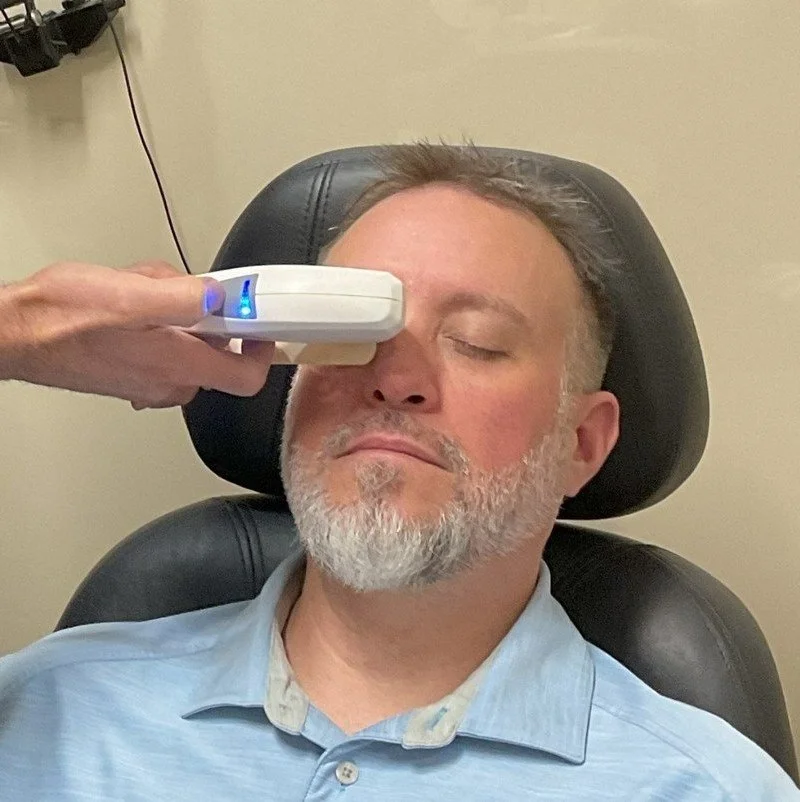
IPL helps reduce inflammatory and vascular drivers.
IPL is especially helpful when ocular rosacea, facial redness, lid inflammation, and abnormal blood vessels are contributing to dry eye.
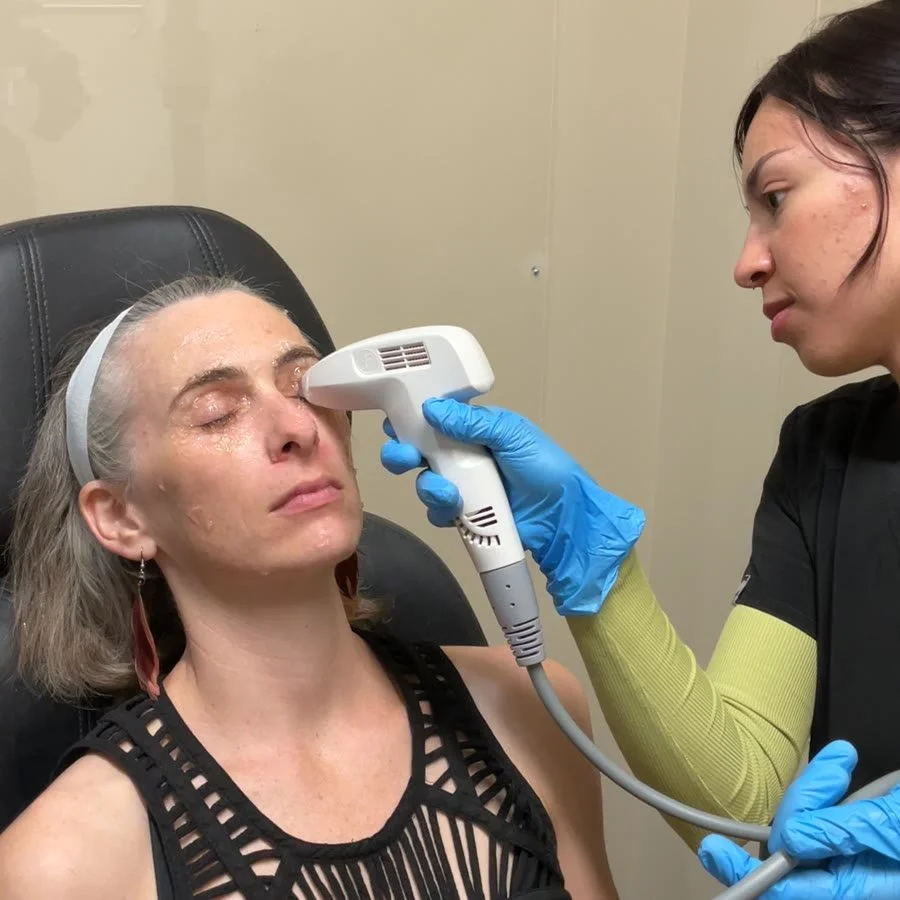
RF helps soften thickened gland oil.
Radiofrequency uses controlled heat around the eyelids and face to help soften thickened meibomian gland oil so gland expression can be more effective.
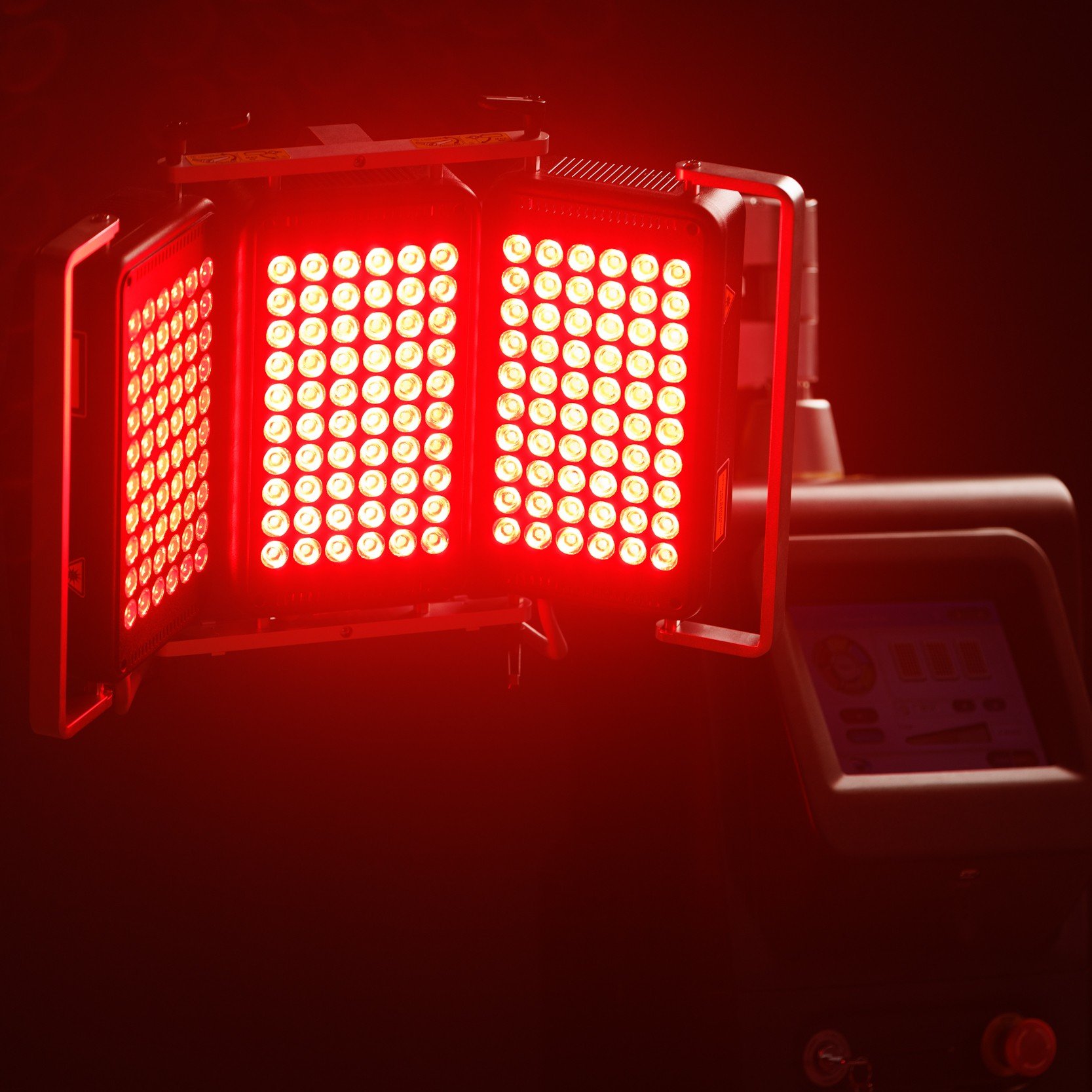
LLLT / red light therapy supports tissue recovery.
Low-Level Light Therapy uses medical-grade red and near-infrared light to calm inflammation, support tissue recovery, and gently warm the glands before expression.
To see how these treatments fit together during a visit, learn more about what happens on dry eye treatment day.
What To Expect
If advanced in-office treatment is recommended, most treatment plans involve a series of visits rather than a single treatment. A typical plan includes four sessions spaced about 2–4 weeks apart, so each treatment can build on the progress from the visit before. At each session, we also perform meibomian gland expression to help clear thickened oil from the glands once the tissue has been warmed and treated. Maintenance treatment may be recommended when needed.
At the first treatment session, we also begin with a gentle diamond exfoliation step using the MDelite iProElite Diamond E-360. This helps remove surface buildup, prepares the skin for treatment, and gives patients a comfortable, relaxing first step before IPL, RF, LLLT, and gland expression.
Improvement is usually gradual as inflammation decreases, gland secretions improve, and the tear film becomes more stable. Many patients need ongoing maintenance because MGD, ocular rosacea, and dry eye are chronic conditions.
Before beginning treatment, we will review:
• Your diagnosis
• Which treatments are recommended
• How many sessions are expected
• Whether IPL is appropriate for your skin type
• Pre-treatment precautions
• Post-treatment care
• Cost and payment details
IPL may not be appropriate for every skin type. When IPL is not recommended, RF and LLLT may still be useful options depending on the exam findings.
We will also provide consent forms and written instructions before treatment.
For a step-by-step overview of the treatment visit, including preparation, eye protection, treatment sequence, gland expression, and post-care instructions, visit our What Happens on Dry Eye Treatment Day page.
Insurance and Payment
The dry eye evaluation is billed to your medical or health insurance because it is a diagnostic medical eye care visit.
Advanced in-office treatments such as IPL, RF, LLLT, Diamond E-360, and meibomian gland expression are not covered by medical insurance and are self-pay services.
Before beginning treatment, our office will review pricing, payment details, pre-procedure instructions, and consent forms so you know what to expect.
Your Questions, Answered
-
The most common reason is meibomian gland dysfunction, especially when the gland oil has become thickened or waxy and inflammation from ocular rosacea is contributing to the problem.
-
Possibly. Artificial tears may still be helpful for comfort, but the goal of treatment is to improve the underlying tear film quality rather than relying only on drops for temporary relief.
-
Many patients begin with a series of four treatments spaced about 2–4 weeks apart. The exact number may vary depending on the severity of inflammation, gland function, symptoms, and response to treatment.
-
Most patients tolerate treatment well. IPL may feel like a brief snap or warm pulse. RF and LLLT are typically experienced as warm treatments. Meibomian gland expression can feel like pressure along the eyelids, but it is usually brief.
-
Dry eye and MGD are chronic conditions. Treatment can improve symptoms and gland function, but maintenance therapy may be recommended depending on your response and underlying risk factors.
-
Ocular rosacea can drive inflammation around the eyelids and meibomian glands. If that inflammation is not addressed, the glands may continue producing poor-quality oil, and symptoms may persist.
-
Response varies from patient to patient. The goal is improvement in symptoms, tear stability, and gland function rather than a permanent cure. Some patients notice meaningful improvement during the treatment series, while others improve more gradually or require ongoing maintenance because MGD, ocular rosacea, and dry eye are chronic conditions.
Next Steps
If you have already completed a dry eye evaluation and received this page as part of your treatment discussion, please review the consent forms, pre-procedure instructions, and pricing summary provided by our office.
If you have not yet had a dry eye evaluation, the first step is to schedule a focused visit so we can determine whether meibomian gland dysfunction, ocular rosacea, or another condition is contributing to your symptoms.
Please contact our office if you have questions or would like help scheduling treatment.
Drs. Bare, Basic & Rohm Optometrists
Charlottesville, Virginia